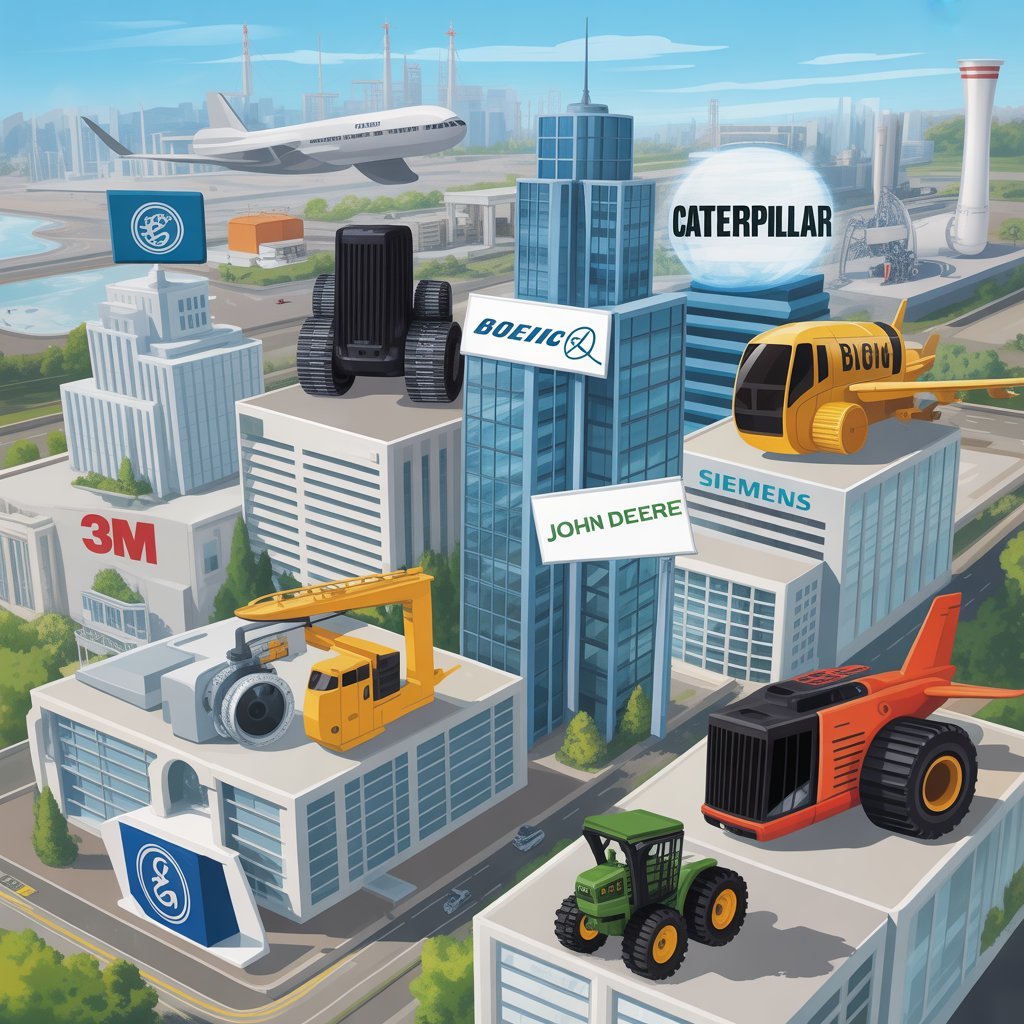
what companies are in the capital goods field: Riches & Risks
Introduction
Have you ever looked at a massive bulldozer or a factory assembly line and wondered who actually builds that stuff? You are not alone. The companies behind these heavy machines shape our entire world, yet most people never think about them. So let’s fix that right now. Understanding what companies are in the capital goods field can change how you see everything from a new skyscraper to the smartphone in your pocket.
Here is the simple truth. Capital goods are the tools, machines, and equipment that businesses use to make other products. Think industrial giants like Caterpillar, Boeing, or General Electric. These are not products you buy at a grocery store. They are expensive, long lasting, and absolutely essential for modern life.
In this article, we will walk through the major categories of capital goods companies. You will learn who the biggest winners are right now, where hidden risks lurk, and how these businesses impact your daily life. We will also share practical tips for investors or curious professionals. By the end, you will confidently answer what companies are in the capital goods field and why it matters to you.
Let us dive in.
What Exactly Are Capital Goods? A Quick Refresher
Before we name names, let us get clear on the definition. Capital goods are tangible assets that a business uses to produce consumer goods or services. They are not finished products sold to everyday shoppers. Instead, they help create, build, or deliver those products.
For example, a bakery’s oven is a capital good. The bread inside is a consumer good. A construction company’s crane is a capital good. The apartment building it lifts into place is not. This distinction matters because the health of capital goods companies often predicts where the broader economy is heading. When businesses stop buying new equipment, a recession might be coming.
So what companies are in the capital goods field? They range from giants making jet engines to small firms producing industrial lasers. We will break them into five major groups for clarity.
The Heavy Machinery Titans
Earthmoving and Construction Equipment
If you picture capital goods, you probably imagine yellow dump trucks and excavators. That is the domain of companies like Caterpillar, Komatsu, and Deere & Company. These firms manufacture the backbone of global infrastructure. Roads, bridges, mines, and stadiums all rely on their gear.
Caterpillar is perhaps the most famous name. They sell machinery in nearly every country. Komatsu from Japan is their fiercest rival. Together, these two control a huge slice of the market. Deere is better known for green tractors, but they also make massive construction equipment like backhoes and loaders.
I once visited a mining site in Nevada, and the scale of these machines was humbling. A single haul truck from Caterpillar can carry over 400 tons of rock. That is like moving a small building in one scoop. When you ask what companies are in the capital goods field, start with these giants.
Agricultural Machinery
Farming might seem old fashioned, but modern agriculture is a high tech capital goods industry. Companies like John Deere, CNH Industrial, and AGCO build tractors, combines, and sprayers that cost hundreds of thousands of dollars. These machines let fewer farmers feed more people than ever before.
Precision agriculture is the new frontier. GPS guided tractors, yield monitors, and autonomous sprayers are turning farms into data centers. Deere’s latest models can plant seeds with inch perfect accuracy. That saves money and increases crop yields.
Aerospace and Defense Giants
Commercial Aircraft Manufacturing
When you board a plane, you are stepping inside a capital good worth over $100 million. Boeing and Airbus dominate this space. They design and assemble jetliners for airlines worldwide. These companies also make spare parts, provide maintenance, and offer training.
Boeing has faced well publicized struggles with the 737 MAX. Yet they remain a cornerstone of what companies are in the capital goods field. Airbus has surged ahead in recent years, especially with their A320neo family. Both companies rely on thousands of suppliers, creating a massive ecosystem.
Defense Contractors
Lockheed Martin, Raytheon, Northrop Grumman, and BAE Systems are the big names here. They build fighter jets, missiles, radar systems, and warships. Governments are their primary customers. Contracts can last decades and be worth billions.
These companies often blend aerospace with advanced electronics. For example, Lockheed’s F-35 is not just a plane. It is a flying sensor platform. Understanding what companies are in the capital goods field would be incomplete without these defense players. Their products protect nations but also raise ethical questions. That tension is real, and you should consider it.
Industrial Conglomerates and Power Systems
Engines, Turbines, and Generators
General Electric (GE) and Siemens are classic examples. They make gas turbines for power plants, wind turbines for renewable energy, and massive diesel engines for ships. These products run for decades with proper maintenance. That means steady revenue from service contracts.
GE has split into three separate companies recently. But its legacy in capital goods remains strong. Siemens is European powerhouse, active in factory automation as well as power generation. Another name worth knowing is Cummins, which builds diesel engines for trucks, buses, and construction equipment.
Electrical Equipment and Transformers
ABB, Eaton, and Schneider Electric manufacture the gear that moves electricity around factories, data centers, and cities. Transformers, switchgear, and circuit breakers sound boring. But without them, your lights go out and your computer dies.
These companies benefit from the global push to upgrade aging power grids. The U.S. and Europe need to replace transformers installed fifty years ago. That creates a multi year tailwind for what companies are in the capital goods field.
Factory Automation and Robotics
Industrial Robots
Fanuc, Yaskawa, and KUKA are the leaders here. They make robotic arms that weld car frames, pack boxes, and assemble electronics. Automation is accelerating because labor costs rise and companies want consistency. A robot does not get tired or demand a raise.
I saw a Fanuc robot work an entire shift without a single mistake. It was eerie and impressive at the same time. These companies also sell software and training. So they are not just hardware sellers. They are solutions providers.
Machine Tools
This is the industry that makes the machines for other machines. Think lathes, milling machines, and grinding equipment. DMG Mori, Haas Automation, and Mazak are top names. They produce precision tools that carve metal into engine blocks, turbine blades, and surgical instruments.
Machine tools are a quiet but critical part of what companies are in the capital goods field. When a factory buys a new five axis mill, they are investing in future production capacity. Orders for machine tools often signal economic confidence.
Specialty and Niche Capital Goods Players
Medical Equipment Manufacturing
Companies like Medtronic, Philips, and GE Healthcare build MRI machines, CT scanners, and surgical robots. These are capital goods for hospitals. A single MRI machine can cost $3 million. They require specialized installation and regular servicing.
This subsector has grown steadily because healthcare spending rises each year. Aging populations in rich countries need more diagnostic equipment. So these companies enjoy predictable demand.
Semiconductor Manufacturing Equipment
This is a hidden giant within capital goods. ASML, Applied Materials, and Lam Research build the machines that make computer chips. Their products are among the most complex ever created. ASML’s lithography machines cost over $200 million each and take months to install.
Without these firms, there would be no iPhones, no data centers, and no AI. Yet most people have never heard of them. That is typical for capital goods. The companies work behind the scenes, enabling everything else.
Material Handling and Logistics
Warehouses and distribution centers rely on conveyors, forklifts, and automated storage systems. Toyota Material Handling, Jungheinrich, and Dematic lead here. The explosion of e commerce has driven huge demand for faster, smarter logistics equipment.
Think about Amazon’s fulfillment centers. They use thousands of robotic drives and conveyor belts. Those are capital goods. And the companies making them have seen explosive growth.
What Companies Are in the Capital Goods Field? A Summary Table
The Economic Cycle and Capital Goods Companies
Here is something crucial. Capital goods companies are cyclical. When the economy booms, businesses buy new equipment. When a recession hits, those purchases stop overnight. That can crush profits.
I learned this lesson the hard way. In 2008, I watched a well run capital goods company lose half its value in six months. It was not a bad company. It was a bad economy. So if you invest in these firms, understand the cycle.
The positive side? When the recovery starts, capital goods stocks often lead the way. They have operating leverage. A small increase in sales can flow straight to the bottom line. That is why patient investors love them.
Risks You Should Not Ignore
Tariffs and trade wars hurt capital goods companies badly. They source parts globally and sell globally. Steel tariffs raise their costs. Trade barriers block their exports.
Another risk is technological disruption. Electric vehicles could reduce demand for diesel engines. 3D printing might eventually replace some machine tools. And automation could even replace the need for some factory equipment. No company is safe forever.
Finally, large projects face delays. A new factory or power plant might take years to build. Customers can postpone or cancel orders. That unpredictability makes earnings volatile.
Opportunities That Excite Me
On the positive side, several trends favor what companies are in the capital goods field. First, the energy transition requires massive investment. Wind turbines, solar trackers, and grid upgrades all need capital goods. Second, reshoring manufacturing brings factories back to the U.S. and Europe. Those factories need equipment.
Third, artificial intelligence is changing industrial software. Predictive maintenance, quality inspection, and supply chain optimization are all AI powered. Capital goods companies that embrace software will thrive.
I personally think the automation subsector has the brightest future. Labor shortages are not going away. Robots and smart machines fill the gap. Companies like Fanuc and Yaskawa could grow steadily for decades.
How to Research Capital Goods Companies Yourself
If you want to go deeper, start with annual reports. Look for the backlog of orders. A growing backlog means customers are confident. Shrinking backlog is a warning sign.
Also check operating margins. Capital goods manufacturing is capital intensive. The best companies earn high margins on their equipment and even higher margins on aftermarket parts and service. That recurring revenue stream is gold.
Finally, pay attention to inventory levels. Rising inventory with flat sales suggests trouble. Falling inventory with rising sales suggests efficiency.
Frequently Asked Questions (FAQ)
1. What companies are in the capital goods field in simple terms?
These are firms that make machines, tools, and equipment used by other businesses to produce things. Examples include Caterpillar, Boeing, and John Deere.
2. Is Tesla considered a capital goods company?
Mostly no. Tesla makes consumer cars. But their energy storage products and factory automation equipment could be seen as capital goods. The label depends on who buys the product.
3. How do capital goods companies make money?
They sell equipment for large upfront payments. Then they earn steady revenue from spare parts, maintenance, and software subscriptions. That aftermarket income is very profitable.
4. Are capital goods stocks good for beginners?
They can be volatile. Beginners should start with a diversified fund like an industrial ETF. Individual stocks require understanding economic cycles.
5. What is the difference between capital goods and consumer goods?
Consumer goods are final products you buy for personal use, like a loaf of bread or a phone. Capital goods are tools to make those products, like an oven or a chip making machine.
6. Which capital goods companies pay dividends?
Many do. Caterpillar, 3M, Emerson Electric, and Eaton have long histories of paying and raising dividends. But always check the payout ratio.
7. How does interest rates affect capital goods companies?
Higher rates make financing expensive. Customers delay buying expensive equipment. So capital goods stocks often fall when rates rise.
8. What companies are in the capital goods field in the technology sector?
ASML, Applied Materials, and Lam Research are tech focused capital goods makers. They build the machines that produce semiconductors.
9. Can small companies succeed in capital goods?
Yes. Niche players like Nordson (precision dispensing equipment) or Woodward (engine controls) thrive. They serve specific markets with high expertise.
10. How do I track the health of this industry?
Watch the Purchasing Managers’ Index (PMI) for manufacturing. Also follow durable goods orders from the U.S. Census Bureau. Both are free and reliable.
Conclusion
Now you have a clear picture. What companies are in the capital goods field ranges from earthmoving giants like Caterpillar to precision robot makers like Fanuc. These businesses build the tools that build our world. They face real risks from economic cycles and trade disputes. But they also offer exciting opportunities from automation, energy transition, and reshoring.
The next time you see a crane lifting steel beams or a factory robot welding a car door, you will know exactly who made that machine. And you will understand why their health matters to your job, your investments, and your daily life.
So here is my question for you. Which capital goods company do you find most interesting, and why? Share your thoughts in the comments. And if you found this guide useful, send it to a friend who loves understanding how things really work.