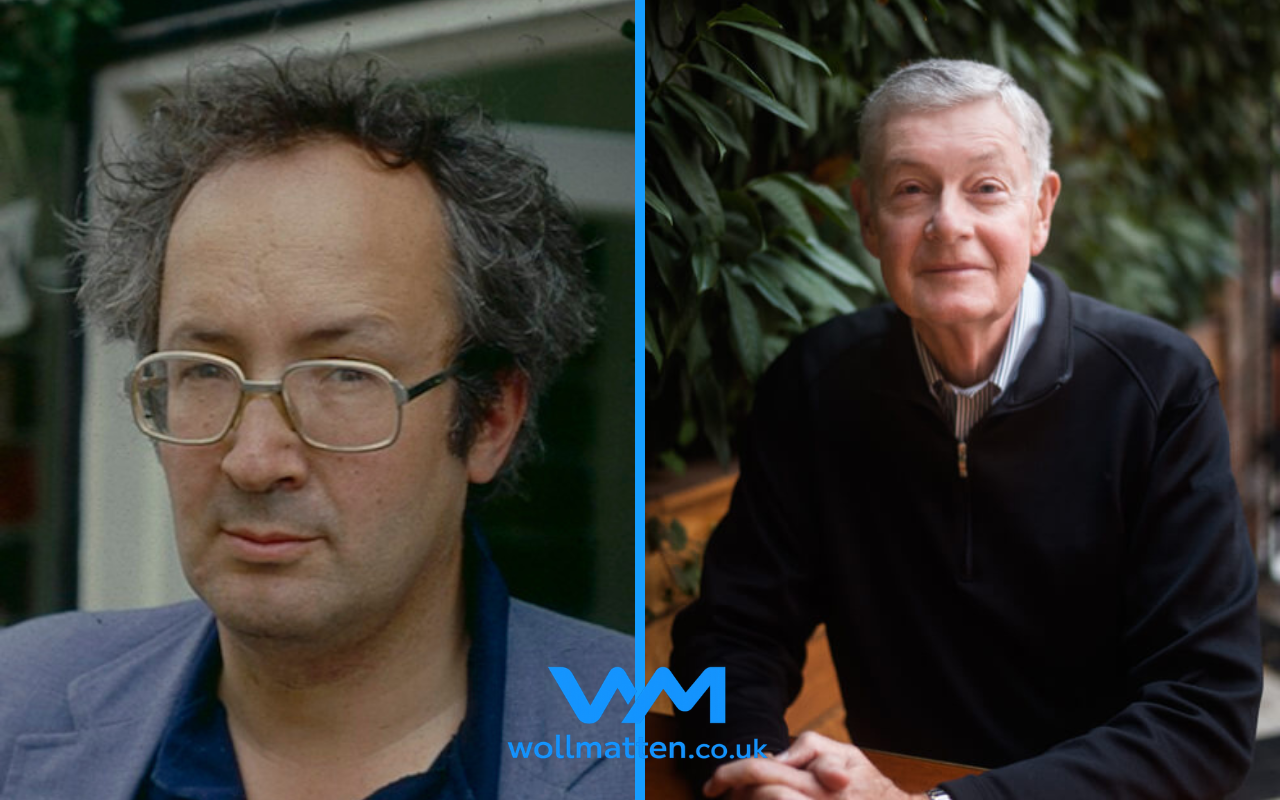
Richard Booth: The Mad King of Hay Who Built a Kingdom of Books
In the rolling hills of the Welsh border, there exists a small town that has become a mecca for bibliophiles from every corner of the globe. At the heart of this remarkable transformation lies one of the most colourful, eccentric, and unforgettable characters in British history—a man who crowned himself king, declared his town an independent nation, and turned a sleepy market settlement into the world’s first “book town.” This is the story of Richard Booth, the self-proclaimed King of Hay, whose vision and audacity created a literary empire from the pages of forgotten books. His journey is one of defiance, imagination, and an obsessive love for the written word—a story that proves sometimes the most extraordinary legacies come from the most unconventional beginnings.
Quick Facts
| Attribute | Information |
|---|---|
| Full Name | Richard George William Pitt Booth |
| Known As | King Richard Cœur de Livre (King Richard Heart of Book) |
| Born | 12 September 1938, Plymouth, Devon, England |
| Died | 20 August 2019 (aged 80), Cusop, Herefordshire |
| Nationality | British |
| Education | Rugby School; Merton College, University of Oxford |
| Profession | Bookseller, Bibliophile, Micronationalist, Entrepreneur |
| Parents | John Booth (father) |
| Siblings | Not publicly documented |
| Known For | Founding the “book town” concept in Hay-on-Wye; self-proclaimed King of Hay; transforming Hay-on-Wye into a global literary destination |
| Awards | MBE (Member of the Order of the British Empire, 2004) |
| Net Worth | Estimated to have fluctuated significantly due to his unconventional business practices; not publicly documented |
| Notable Works | My Kingdom of Books (autobiography, 1999) |
| Political Affiliation | Socialist Labour Party |
| Social Media | Pre-dates active social media era |
The Roots of a Visionary
Richard George William Pitt Booth entered the world on 12 September 1938 in Plymouth, Devon, into a family of considerable means and tradition. His upbringing was one of privilege—he was educated at the prestigious Rugby School, one of England’s finest public schools, before progressing to Merton College at the University of Oxford. On the surface, it seemed Richard was destined for a conventional upper-class life, perhaps entering the professions or inheriting a comfortable estate.
But something about the traditional path never quite fit young Richard Booth. He was restless, possessed of an imagination that refused to be contained by convention. Despite his Oxford education, Booth left the university without completing his degree—a decision that scandalised his family but revealed the independent streak that would define his entire life. He was searching for something more meaningful, something that would allow him to break free from the expectations placed upon him.
This search led him to a stroke of fate that would alter his life and reshape the destiny of a small Welsh border town. In 1962, Booth inherited the Brynmelyn estate from his uncle, Major Willie Booth. The estate included land and property in Hay-on-Wye—a sleepy, somewhat forgotten market town nestled on the edge of the Brecon Beacons in Wales. It was here, in the old fire station of this unremarkable town, that Booth opened his first second-hand bookshop.
At first glance, opening a second-hand bookshop in a tiny rural town may have seemed like nothing more than a peculiar hobby for an eccentric young man. But Booth saw something in Hay-on-Wye that others missed. He looked at the town’s declining fortunes, its young people leaving for the cities, and its quiet rural economy, and he wondered what trade could breathe life back into this forgotten corner of Britain. The answer, he realised, lay in books.
Building a Kingdom of Books
What Richard Booth lacked in business orthodoxy, he more than compensated for with vision, energy, and an utterly fearless approach to publicity. He understood something fundamental about the book trade that would transform Hay-on-Wye forever: books were more than just commodities—they were vessels of culture, memory, and intellectual adventure.
Booth’s entrepreneurial instincts were as audacious as they were unconventional. In a move that would become legendary in the book trade, he took a team of the strongest men from Hay-on-Wye and travelled to America, where libraries were closing at an alarming rate. He bought entire library collections, packed them into shipping containers, and brought them back to Hay-on-Wye. This wasn’t merely buying stock—it was an act of bibliophilic rescue on an industrial scale. He was saving history, culture, and forgotten knowledge from the dumpster and giving it new life.
His example proved contagious. Other booksellers followed his lead, setting up shop in Hay-on-Wye until the town became internationally known as the “Town of Books”. What had been a quiet rural settlement became a destination—a place people travelled from across the United Kingdom and around the world to visit. The concept of the “book town” was born, and Hay-on-Wye was its prototype.
But Booth understood that books alone weren’t enough. The town needed publicity and promotion to draw visitors, and he possessed a genius for attracting attention that was far ahead of its time. In the years before social media and viral marketing, Booth instinctively understood how to create a story that the press would love. His timing was impeccable, his stunts were legendary, and his willingness to court controversy was matched only by his commitment to his vision.
The Declaration of Independence
On 1 April 1977, Richard Booth made his most audacious move. He proclaimed Hay-on-Wye an independent kingdom with himself as its monarch. Taking the regal title King Richard Cœur de Livre—King Richard Heart of Book—he declared the town’s independence from the United Kingdom. In one of his most inspired gestures, he appointed his horse as Prime Minister.
It was, of course, a publicity stunt, but it was so brilliantly conceived and executed that it captured the public imagination. The press went wild. Here was a story that practically wrote itself—an eccentric Oxford-educated bibliophile declaring himself king of a tiny Welsh border town! The news coverage was extensive, and Hay-on-Wye’s profile skyrocketed. Booth began issuing “passports” for the Kingdom of Hay, adding to the sense of whimsy and adventure that now surrounded the town.
Booth’s declaration of independence was more than just a jape—it was a deeply considered response to the challenges facing rural communities. He saw Hay-on-Wye’s economic decline and understood that the town needed something bold, something that would demand attention and draw visitors. The “kingdom” gave Hay an identity, a story, and a reason for people to come. It was an act of creative marketing dressed up as an act of regal defiance.
The Hay Festival: An Unwanted Heir
Perhaps the greatest irony of Richard Booth’s life is that his creation gave birth to a rival that would overshadow his own achievement. The burgeoning number of bookshops in Hay-on-Wye, and the tourists they attracted, created the conditions for the Hay Literary Festival. What began as a modest gathering of book lovers has grown into one of the most prestigious literary festivals in the world, attracting presidents, Nobel laureates, and the brightest literary minds of our age.
Booth did not welcome this development. He saw the Hay Festival as a commercial interloper that had grown too dominant, attracted too much attention, and siphoned away focus from the independent bookshops he had worked so hard to establish. He openly criticised the festival, arguing that its commercial success was coming at the expense of the second-hand bookshops that had made Hay famous in the first place.
His frustration was understandable. Booth had spent decades building Hay’s reputation as a book town, only to watch a festival—one he had no part in creating and whose ethos he deeply distrusted—capture the world’s imagination. The Hay Festival has brought immense fame and fortune to the town, but for Booth, it was a bittersweet success—a living monument to his achievement that was nonetheless a constant source of frustration.
The Revolt of the Republic
The tension between Booth and the forces he had unleashed finally boiled over in 2009 when a group of “republican” booksellers, led by Paul Harris, staged a mock trial and beheading of a Booth effigy. Dressed as Roundheads, the rebels proclaimed the end of Booth’s reign and the establishment of a “Commonwealth of Hay”. The trial was held in the Butter Market, with onlookers jeering and cheering as Booth’s fake head rolled into a bucket.
This revolt was not just a stunt—it was a genuine expression of the changing times. The rebels argued that Booth had failed in his duties to the town’s booksellers. They pointed to the declining fortunes of independent bookshops, blamed the increasing commercial dominance of the Hay Festival, and argued that Booth’s brand of publicity was no longer effective in the modern era. Paul Harris told the press, “You can fill a town with books, but that won’t bring people to the town… You need publicity and promotion, which is now all sucked up by the festival. Richard used to be great at drumming up publicity and denouncing the festival. He’s not able to do that any more.”
Booth, characteristically, was unimpressed. He dismissed the rebels as “revolting peasants” who “don’t know what they’re talking about”. Despite the symbolic beheading, he and Paul Harris reportedly remained on good terms—a testament to the complex relationships that Booth cultivated throughout his life. The “king” may have been “deposed” in a theatrical ceremony, but his legacy as the man who put Hay on the map remained unassailable.
Politics and Public Life
Richard Booth’s life was never confined to books. His interests ranged widely, and he possessed a distinct if unconventional political sensibility. Booth was active in the Socialist Labour Party, standing as a candidate in both Welsh Assembly and European Parliament elections. In 1999, he contested the Mid and West Wales region for the Welsh Assembly, securing 3,019 votes (1.4% of the vote). In 2009, he stood for the European Parliament for the Wales constituency, winning 12,402 votes (1.8%).
His political engagement reflected his broader commitment to his community. Booth wasn’t just selling books—he was fighting for the economic future of his adopted home. He understood that without political voice, rural communities could be forgotten by national governments. His political career may not have achieved electoral success, but it demonstrated his determination to fight for what he believed in.
In 2004, Booth received recognition for his contribution to tourism with the award of the MBE (Member of the Order of the British Empire) in the New Year Honours List. It was a fitting acknowledgment of his transformative impact on Hay-on-Wye, which now attracts an estimated 500,000 tourists annually. The man who had crowned himself king was finally recognised by the very establishment he had so cheerfully defied.
The Man Behind the Crown
Beneath the publicity stunts and the regal pretensions, Richard Booth was a complex, deeply human figure. He loved Hay-on-Wye with a fierce devotion that bordered on obsession. He invested his inheritance in the town, not as a financial speculation but as a labour of love. He saw something in Hay that others missed—a potential, a romance, a future—and he dedicated his life to bringing it into being.
He was, by all accounts, a difficult character—chaotic, egotistical, and stubborn to the point of self-destruction. His business instincts were often questionable, and his personal life could be chaotic. But those who knew him speak of his generosity, his warmth, and his genuine commitment to the people and place he loved. He launched countless careers, helped countless people, and inspired a generation of booksellers.
His autobiography, My Kingdom of Books, published in 1999 with the help of his stepdaughter Lucia Stuart, offers a glimpse into the mind of this extraordinary figure. It is a tale of passion and obsession—of one man’s determination to build a kingdom out of second-hand books. The book captures Booth’s voice: grandiose, passionate, and utterly convinced of the importance of his mission.
Booth’s personal life was as unconventional as his professional one. He lived for many years at Brynmelyn, his uncle’s estate, surrounded by the books he loved. He had a daughter, Elizabeth Booth, and maintained relationships with various figures who passed through his orbit. His friendships spanned the globe, from local booksellers to international celebrities who were drawn to his charismatic and unpredictable personality. The writer Stephen Fry has described his life story as “breathtakingly hilarious and absorbing,” praising Booth as one of the most “brilliant, dotty, dippy, delirious yet ultimately inspiring eccentrics in British history”.
The Enduring Legacy
Richard Booth passed away on 20 August 2019 at the age of 80 in Cusop, Herefordshire. His death marked the end of an era, but his legacy endures in every bookshop in Hay-on-Wye and in every “book town” around the world that followed his pioneering example.
The annual Richard Booth Prize for Non-Fiction, established in 2014 in association with the Hay Writers’ Circle, carries on his name and his passion for the written word. Each year, a distinguished judge selects a winner from a field of writers who continue the tradition of non-fiction excellence that Booth cherished.
In 2025, a major biography of Booth was published, The Bookseller of Hay: The Life and Times of Richard Booth, written by James Hanning. The book captures the full scope of his eccentric genius and complicated personality. It has attracted high-profile endorsements and rekindled interest in Booth’s remarkable story. Hanning has described Booth as “an influencer ahead of his time,” pointing to his genius for publicity and his ability to understand what makes a story compelling.
Booth’s influence extends well beyond Hay-on-Wye. His idea of the “book town” has been replicated across the globe, with communities in Europe, America, and beyond using books to revitalise struggling economies. He demonstrated that books are not just commodities—they are cultural assets that can transform communities and bring people together. His concept has been so successful that it has inspired the creation of numerous “book towns” in places as diverse as France, Spain, and the United States.
Looking to the Future
As Hay-on-Wye continues to evolve in the twenty-first century, the debates that animated Booth’s later years remain relevant. How can independent bookshops survive in an age of online retail and digital books? How can the town’s literary heritage be preserved while adapting to changing times? These are questions that Booth wrestled with throughout his later years, and they remain central to Hay’s future.
The ongoing interest in Booth’s life—reflected in the new biography by James Hanning—suggests that his story continues to resonate with contemporary audiences. There is something deeply compelling about his refusal to accept the world as he found it, his determination to create something new, and his willingness to make a spectacle of himself in pursuit of a vision. In an age of authenticity and personal branding, Booth stands out as a pioneer—a man who instinctively understood the power of a good story.
Conclusion
Richard Booth was many things: bookseller, bibliophile, king, socialist, rebel, visionary, and eccentric. But above all, he was a man who believed in the power of books to transform lives and communities. His story is a reminder that the most significant contributions often come from the most unconventional sources—from people who refuse to accept the world as it is and instead insist on building the world as it could be.
He put Hay-on-Wye on the map, and in doing so, he created a legacy that continues to inspire. The town he loved is now a global literary destination—a place where book lovers from every continent gather to celebrate the written word. Whether you visit Hay during the world-famous literary festival or wander its streets on a quiet winter afternoon, you are walking through the kingdom that Richard Booth built.
As Richard Booth continues to pave the way for future generations, his story stands as a reminder of how resilience and purpose can shape a meaningful legacy. He was a man who dreamed big, acted boldly, and never stopped fighting for what he believed in. He crowned himself king of a fictional kingdom, but the real kingdom he created—the Kingdom of Books—endures as one of the most delightful and enduring achievements in modern British cultural history.
Read this to: Fiona Bruce: The Story of Britain’s Most Versatile Broadcaster
Frequently Asked Questions