Fiona Bruce: The Story of Britain’s Most Versatile Broadcaster
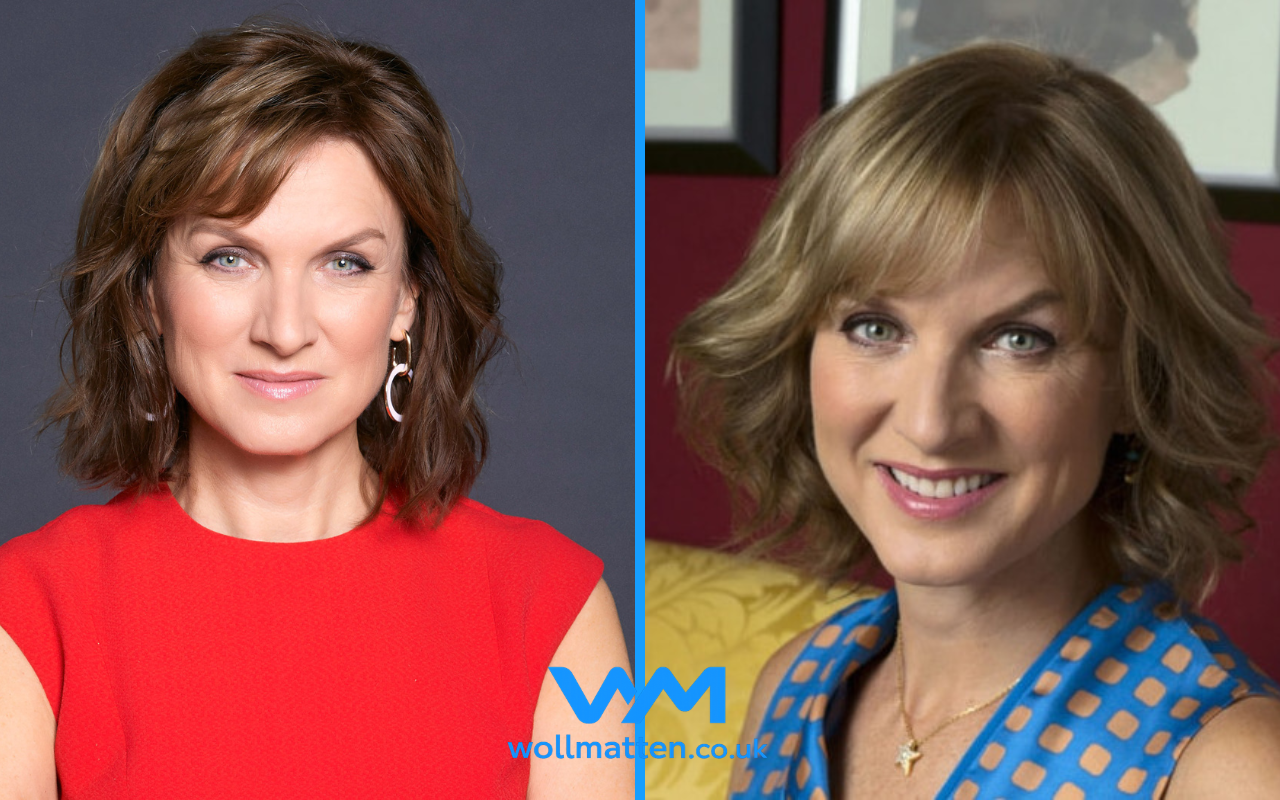
There’s a unique kind of magic that happens when Fiona Bruce walks onto a screen. It’s not just the poise, the intelligence, or the unmistakable warmth she brings to every show—it’s the sense that you’re in safe hands. Whether she’s delivering the day’s most pressing news, uncovering the secrets of a lost masterpiece, or navigating a heated political debate, Fiona has a rare ability to make the complex feel accessible and the formal feel personal. For over three decades, she has been a constant, reassuring presence in British broadcasting, a true household name whose career spans the full spectrum of television. But how did the daughter of a Unilever executive, born in Singapore, rise to become one of the most respected and beloved figures on the BBC? This is the story of a woman who has not just witnessed history but has been a key part of how we understand it.
Here is a quick look at the essential facts about Fiona Bruce.
| Quick Facts | |
|---|---|
| Full Name | Fiona Elizabeth Bruce |
| Date of Birth | 25 April 1964 |
| Age | 62 years old |
| Birthplace | Singapore |
| Profession | Journalist, Newsreader, Television Presenter |
| Parents | English mother; Scottish father (a regional managing director for Unilever) |
| Siblings | Two elder brothers |
| Spouse | Nigel Sharrocks (married in 1994) |
| Children | Two: Sam and Mia |
| Net Worth | Estimated at $4 Million |
| Notable Shows | BBC News at Ten, Antiques Roadshow, Question Time, Fake or Fortune?, Crimewatch |
| N/A (She is not known to have a public Instagram account) | |
| Twitter/X | N/A (She is not known to have a public Twitter/X account) |
Table of Contents
ToggleFrom Singapore to the Screen
Fiona Elizabeth Bruce’s story begins far from the BBC studios of London. Born in Singapore on April 25, 1964, she is the daughter of an English mother and a Scottish father who climbed the corporate ladder to become a regional managing director for Unilever . This international upbringing meant that home was a fluid concept. She spent her early childhood on the Wirral in England, later attending the International School of Milan in Italy, an experience that would foster her fluency in languages and give her a global perspective early on .
Her path to journalism wasn’t a straight line. At 14, she returned to the UK and attended Haberdashers’ Aske’s Hatcham College in New Cross, London. During this time, she took on a job that seems almost incongruous with her future image: modelling for the stories in the teenage girls’ magazine Jackie . A rebellious streak also emerged during her time at Oxford, where she read French and Italian at Hertford College. She briefly embraced the punk movement, singing in rock bands and, famously, dyeing her hair blue for a week . This glimpse of a youthful, defiant Fiona offers a fascinating contrast to the polished broadcaster we know today.
After graduating, she tried her hand at management consultancy but found it crushingly dull. “I dreaded the meetings, the tedium, the fact that I was in the wrong job. I was so unhappy. I used to cry in the loos at lunchtime,” she later recalled . She then moved into advertising, working at agencies including Boase Massimi Pollitt—where she met her future husband, Nigel Sharrocks. Her big break came at a wedding, where she met Tim Gardam, the editor of the BBC’s flagship current affairs programme, Panorama. She persuaded him to give her a job, and in 1989, she joined the BBC as a researcher . It was the start of a journey that would see her become a true icon of British television.
A Career Built on Versatility
Fiona Bruce’s career is defined by its remarkable diversity. She didn’t just become a journalist; she became a master of many formats, moving seamlessly between hard news, factual entertainment, and live debate. Her rise through the BBC ranks was steady and well-earned. After starting as a researcher on Panorama, she became an assistant producer before moving into reporting on Breakfast News in 1992 . She honed her skills at BBC South East and reported for Newsnight before landing her first major news presenting role. In 1999, she was named the secondary presenter of the BBC Six O’Clock News .
However, her most significant promotion came in January 2003 when she and Huw Edwards moved to present the flagship BBC News at Ten . This was a historic moment: Fiona Bruce became the first female presenter of the bulletin, breaking a significant glass ceiling in British broadcast journalism. She has since been a mainstay of the BBC’s news output, also presenting the BBC News at Six and fronting the BBC’s general election results coverage .
Parallel to her news career, Fiona became a familiar face on lighter but equally prestigious programmes. In 1998, she began presenting The Antiques Show on BBC Two, foreshadowing her eventual role on the iconic Antiques Roadshow . When Michael Aspel retired in 2007, Fiona was announced as his replacement, a decision that initially caused some controversy among traditionalists . Yet she silenced the critics, and viewership actually increased during her first year, proving she had the perfect blend of curiosity and charm for the role . Her passion for antiques became a “life-changing” hobby, transforming her into a “hugely enthusiastic antiques buyer, auction bidder and junk shop devotee” .
Her portfolio expanded even further when she took over from David Dimbleby as the host of Question Time in January 2019, once again becoming the first female host in its long history . The role is widely considered one of the toughest in broadcasting, requiring a firm hand to steer lively political debates. Fiona has also co-hosted Fake or Fortune? with art expert Philip Mould since 2011, delving into the mysteries of art authentication, and presented several acclaimed documentaries on historical figures like Queen Victoria and Leonardo da Vinci .
Personal Life and Principles
Away from the bright lights of the studio, Fiona Bruce leads a grounded and private life. She has been married to her husband, Nigel Sharrocks, since July 1994. Nigel is a successful businessman who served as Managing Director of Warner Bros Pictures UK and is now the non-executive chairman of Digital Cinema Media . The couple met while working in advertising and have built a strong partnership over more than 30 years. They have two children, a son named Sam and a daughter named Mia .
Fiona is refreshingly honest about the struggles of balancing a high-powered career with motherhood. “Did I spend enough time with my children? I think scratch the surface of any working woman and she will always think, ‘Probably not,'” she once admitted . She has a unique and philosophical view on the subject, stating, “I don’t think there’s such a thing as quality time with your children. I think it’s quantity. But there’s never been any question that they take precedence over everything in my life, and always have done” . This honest reflection on the challenges of modern life makes her one of the most relatable figures on television.
Her commitment to feminism has been a lifelong principle, though one she feels has evolved. At university, she ran an anti-pornography campaign, and she remains vocal about the importance of the movement. She has expressed disappointment in women who dislike working with other women and has often challenged sexist attitudes in her professional life . However, she has also mellowed somewhat, learning to accept compliments on her appearance without feeling they undermine her professional ability .
Net Worth and Public Presence
As one of the BBC’s most prominent and enduring stars, Fiona Bruce is compensated accordingly. In 2023, she was the sixth highest-paid star at the BBC, with an annual salary reported to be between £395,000 and £399,999 . This figure represents a slight decrease from previous years, where she earned between £405,000 and £414,999 . Her overall net worth is estimated to be around $4 million . This income is derived not just from her presenting duties on Antiques Roadshow and Question Time, but also from her work on the BBC News at Ten and other documentary projects. She has also authored books, adding another stream to her impressive portfolio.
Fiona is distinct from many modern celebrities in that she maintains a relatively low profile on social media. She does not have a public-facing Instagram or Twitter account, preferring to let her work speak for itself. This conscious decision to maintain a degree of privacy adds to her mystique and allows her to remain a serious, trusted figure. Her presence is felt entirely through her work, which is a testament to her ability to connect directly with audiences through the television screen without the need for a constant online persona.
Most recently, in May 2024, Fiona sparked a brief controversy during a Question Time broadcast from Aberdeen, when she was accused of persistently interrupting SNP leader Stephen Flynn, leading to a wave of complaints . The incident highlighted the intense scrutiny that comes with her role. Despite these occasional controversies, she remains a central and highly valued part of the BBC’s presenting team, and her future likely holds more landmark documentaries and interviews. Her career shows no signs of slowing down, and she continues to be a leading figure in shaping the television landscape of the UK.
Conclusion
Fiona Bruce’s journey is a masterclass in resilience, adaptability, and grace. From a punk teenager with blue hair to the first woman to anchor the BBC News at Ten, she has continually broken barriers and redefined what it means to be a female broadcaster. Her story is a powerful reminder that the most successful careers are often built not on a single talent, but on a wide-ranging curiosity and a willingness to embrace new challenges. She has informed us, entertained us, and moderated our national debates with a sense of fairness and authority that is increasingly rare. As Fiona Bruce continues to pave the way for future generations, her story stands as a reminder of how a commitment to excellence and a refusal to be pigeonholed can build a truly enduring and meaningful legacy.
Read this to: James Arthur Net Worth: A Story of Redemption, Resilience, and Raw Talent
Frequently Asked Questions (FAQs)
How old is Fiona Bruce?
Fiona Bruce was born on 25 April 1964, making her 62 years old .
What is Fiona Bruce’s net worth?
Fiona Bruce’s net worth is estimated to be around $4 million .
Who is Fiona Bruce’s husband?
She is married to Nigel Sharrocks, a businessman who formerly served as the Managing Director of Warner Bros Pictures UK and is currently the non-executive chairman of Digital Cinema Media . They married in 1994.
Does Fiona Bruce have children?
Yes, she has two children: a son named Sam and a daughter named Mia .
What is Fiona Bruce famous for?
Fiona Bruce is a renowned British journalist and television presenter known for hosting several flagship BBC programmes, including the BBC News at Ten, Antiques Roadshow, Question Time, and Fake or Fortune? .
Where was Fiona Bruce born?
She was born in Singapore .
How much does Fiona Bruce earn?
As of the 2022/2023 reporting period, Fiona Bruce’s annual BBC salary was between £395,000 and £399,999, making her the BBC’s sixth highest-paid star .