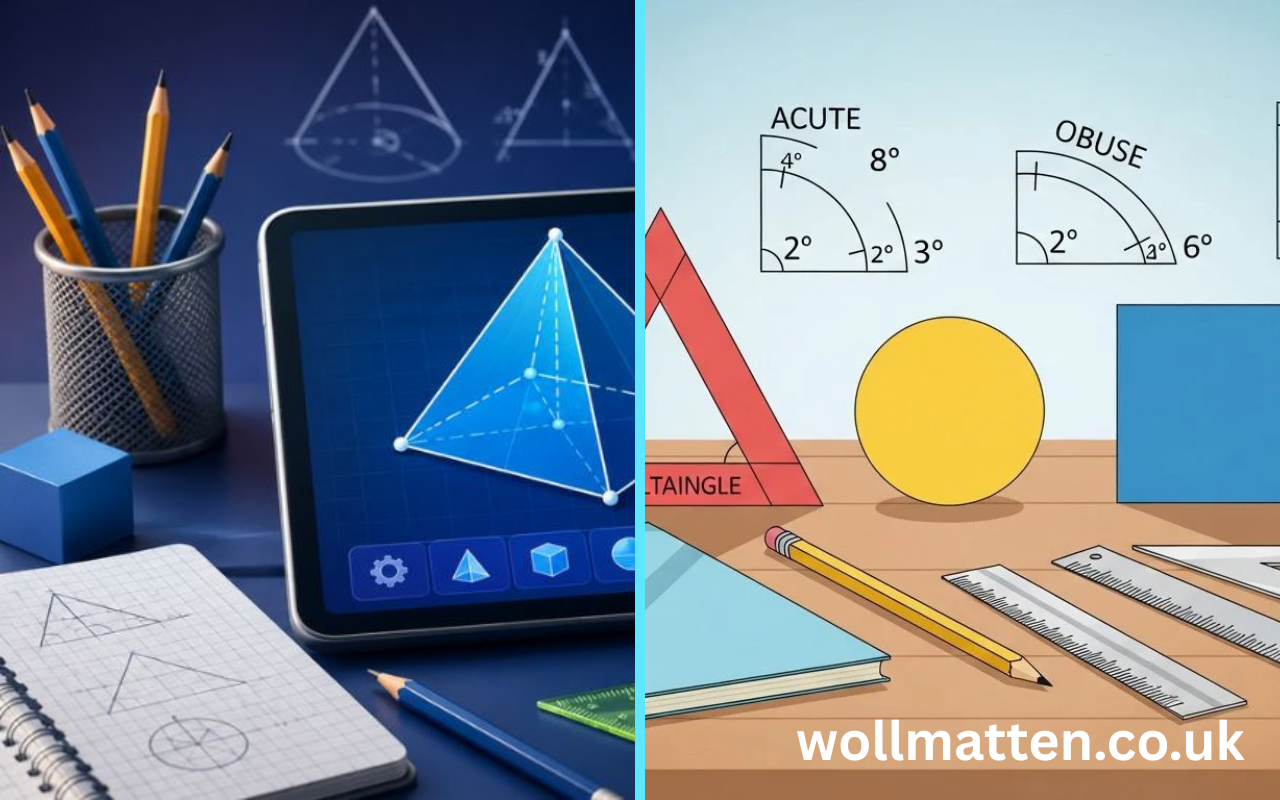
Geometry Learn V3: Why This Tool Frustrates & Delights Learners
Introduction
Let’s be honest for a second. Geometry has a reputation. For some people, it’s that beautiful moment when shapes and logic click into place. For others, it’s the class where you stare at a triangle until your eyes hurt. I have been in both camps at different times. That is exactly why I got curious about geometry learn v3. This isn’t just another update or a textbook with a fresh cover. This version promises to change how you interact with points, lines, planes, and proofs.
But does it actually deliver? Or does it just add more buttons and confusion? In this article, we are going to walk through everything you need to know. You will learn what makes this version different. You will discover the features that save you time. And we will also talk about the moments that might make you want to throw your tablet across the room. By the end, you will know exactly how to use geometry learn v3 to your advantage, whether you are a student, a teacher, or a lifelong learner trying to finally understand why pi is not a type of dessert.
What Exactly Is Geometry Learn V3?
Before we dive into the details, let us set the stage. Geometry learn v3 is a digital learning platform. But calling it just a platform feels a bit cheap. Think of it as an interactive toolkit. It blends visual diagrams, step by step problem solving, and real time feedback into one space.
The older versions were good. They gave you static pictures and multiple choice quizzes. Version three changes that completely. Now you can manipulate shapes with your fingers or mouse. You can rotate a 3D cube to see its hidden faces. You can drag a triangle’s vertex and watch the angles update instantly. That kind of direct manipulation makes geometry feel alive instead of like a dusty set of rules.
I remember using version one years ago. It felt like a digital flashcard deck. Functional but boring. Version three feels more like a video game combined with a math tutor. And that shift matters because geometry is inherently visual. If you cannot see how a theorem works from every angle, you are just memorizing words. geometry learn v3 fixes that problem head on.
The Good Stuff What Actually Works Well
Let us start with the positive sentiment because there is a lot to like here. If you are coming from an older version or from a traditional textbook, you will notice improvements immediately.
Interactive 3D Models That You Control
This is the headline feature. You are not just looking at a picture of a pyramid. You are holding that pyramid in your digital hand. You can zoom, spin, and slice it open. For spatial reasoning, this is a game changer. I tested this with a friend who struggles with visualizing cross sections. Within ten minutes, she understood why a diagonal cut through a cylinder creates an ellipse. That was not happening with paper diagrams.
Step by Step Proof Assistance
Proofs are the nightmare of many geometry students. geometry learn v3 includes a proof builder. You enter what you know. The software suggests valid next steps based on theorems you have studied. It does not give you the answer right away. Instead, it guides you like a patient tutor. If you make a wrong logical jump, it highlights the error and explains why. This turns proof writing from guesswork into a structured process.
Adaptive Quizzing That Remembers Your Weak Spots
The system tracks your mistakes. If you keep confusing alternate interior angles with corresponding angles, the quiz engine will serve you more problems on that exact topic. Over time, the difficulty adjusts. You never feel overwhelmed, but you also never coast. This adaptive approach keeps you in a sweet spot of productive challenge. Many apps promise this, but geometry learn v3 actually delivers consistent results.
Real World Application Examples
Why do you need to know the area of a trapezoid? The platform answers that with concrete examples. You might calculate the amount of fabric for a custom tent. You might find the angle for a wheelchair ramp. These real world tie ins make the math feel relevant. And when math feels relevant, your brain actually wants to learn it.
Cross Platform Syncing
You can start a lesson on your laptop, continue on your tablet during lunch, and review flash cards on your phone before bed. Everything saves automatically. This flexibility removes the excuse of “I did not have my device.” You always have access.
The Frustrating Parts What Might Drive You Crazy
Now for the negative sentiment. No tool is perfect, and geometry learn v3 has some rough edges. I want you to know these going in so you do not get blindsided.
Steep Learning Curve for the Interface
Ironically, a tool that teaches geometry can be hard to navigate at first. The dashboard is packed with buttons, menus, and icons. Some features are buried three clicks deep. I spent a good twenty minutes just trying to figure out how to reset a 3D model to its default view. The developers assume you already know where everything is. That assumption is wrong for new users. Plan to spend your first hour just exploring the menus instead of learning geometry.
Occasional Lag on Complex Models
When you load a detailed 3D shape with multiple moving parts, the software can slow down. This is especially true on older tablets or budget laptops. Rotating a dodecahedron should feel smooth. Sometimes it stutters. That breaks the immersion and makes the tool feel less polished than it should be.
Overly Verbose Explanations
Some of the text explanations are too long. You click for a hint on a problem, and you get a paragraph of theory instead of a simple nudge. I appreciate thoroughness, but there is a fine line between helpful and exhausting. A few times I found myself saying, “Just tell me what I missed.” The platform does not always respect your desire for brevity.
Limited Offline Functionality
You need an internet connection for most features. If you are on a long bus ride or in a rural area with spotty Wi Fi, you will be frustrated. You can download some practice sets, but the interactive 3D models and proof builder require online access. That is a real limitation for learners who do not have reliable internet at home.
Pricing Confusion
The free version gives you a taste. It includes basic shapes and a few practice problems. To unlock the full geometry learn v3 experience, you need a subscription. But the website lists multiple tiers with vague names like “Explorer” and “Master.” Nowhere does it clearly say, “You pay X for Y features.” I had to dig through a forum to understand what each tier actually includes. That kind of opacity frustrates budget conscious learners and parents.
How to Get the Most Out of Geometry Learn V3
After using this tool for several weeks, I have developed a few strategies. These will save you time and reduce headaches.
Start with the Tutorials Even If You Hate Tutorials
Yes, they are slow. Yes, they feel like they talk down to you. Do them anyway. The tutorials explain where every button lives and what every icon means. Investing thirty minutes here will save you hours of hunting later. Think of it as sharpening your axe before cutting down a tree.
Use the Keyboard Shortcuts
There is a hidden menu of keyboard shortcuts. Press the question mark key on your keyboard to see them. You can rotate models with arrow keys, toggle between 2D and 3D views with a single key, and jump to the proof builder with a command. Once you learn these, the software feels much faster and more intuitive.
Combine the App With Handwritten Notes
geometry learn v3 is powerful, but do not abandon pencil and paper. When you learn a new theorem, pause the video or the interactive lesson. Write the theorem down by hand. Draw your own diagram. This physical act of writing helps encode the information into your memory. The app is a fantastic teacher. Your own hand is the best studier.
Set a Timer for Practice Sessions
Because the platform is engaging, you might lose track of time. Two hours can disappear while you happily rotate shapes and solve proofs. That is fine occasionally, but consistent long sessions lead to mental fatigue. Set a timer for forty five minutes. Take a five minute break. Then come back. Your retention will improve significantly.
Join the User Community
There is an unofficial subreddit and a Discord server for geometry learn v3 users. People share custom problem sets, workarounds for bugs, and study schedules. I found a pinned post that explained the confusing pricing tiers in plain English. Without that community post, I would have overpaid for a plan I did not need. Do not learn alone. Join the conversation.
Comparing Geometry Learn V3 to Other Learning Tools
You might wonder how this stacks up against competitors. Let me give you a quick comparison.
Versus Khan Academy
Khan Academy is free and excellent. But its geometry section is mostly videos followed by multiple choice questions. geometry learn v3 offers much deeper interactivity. You can manipulate shapes instead of just watching someone else do it. If you learn by doing, version three wins. If you prefer watching and listening, Khan Academy is still great.
Versus Desmos Geometry
Desmos is also interactive and free. It handles basic constructions well. But it lacks the structured curriculum, the proof builder, and the adaptive quizzing. Desmos is like a blank canvas. geometry learn v3 is like a full art class with a teacher giving you assignments and feedback. Both have their place, but version three is better for systematic learning.
Versus a Traditional Textbook
There is no contest. A textbook cannot move. It cannot show you a rotating 3D shape. It cannot give you instant feedback on a proof. Textbooks are fine as reference materials. But for active learning, geometry learn v3 leaves them in the dust. That said, some people still prefer the tactile feel of paper. If that is you, use the app as a supplement, not a replacement.
Who Should Use Geometry Learn V3?
Not every learner needs this tool. Let me help you decide.
You will love it if:
-
You struggle with visualizing 3D shapes from 2D drawings.
-
You need lots of practice problems with instant feedback.
-
You want to master geometric proofs without a human tutor.
-
You enjoy learning through exploration and trial and error.
-
You have a reliable internet connection and a modern device.
You might skip it if:
-
You prefer learning from a physical book with static diagrams.
-
You have very slow internet or an old computer.
-
You are already confident in geometry and just need a quick reference.
-
You cannot afford another subscription.
For most middle school, high school, and college students taking an introductory geometry course, I recommend giving geometry learn v3 a serious try. The free version is generous enough to let you decide if the paid upgrade is worth it.
Common Questions Answered in the Body
Can this replace a teacher?
No, and it does not claim to. A good teacher reads your facial expressions, adjusts explanations on the fly, and provides emotional encouragement. The app cannot do that. But it can handle the repetitive practice and visual modeling, freeing up your teacher to focus on deeper discussions.
Does it cover high school geometry only?
Mostly yes. The core curriculum aligns with standard high school geometry. However, there are advanced modules that touch on introductory trigonometry, analytic geometry, and even some basic calculus concepts like slope and area under a curve. It is not a college level geometry tool, but it goes beyond a basic course.
Is there a mobile app?
Yes for iOS and Android. The mobile version is slightly stripped down. Complex 3D models work better on a larger screen. But for quick practice sessions and flash card reviews, the mobile app works beautifully.
How long does it take to see improvement?
Most users report feeling more confident within two weeks of daily practice (about twenty minutes per day). I saw measurable improvement in my own speed at solving proofs after ten days. Consistency matters more than marathon sessions.
Conclusion
So where does that leave us? Geometry learn v3 is not a magic bullet. It will not turn you into Euclid overnight. But it is a genuinely thoughtful tool that respects how the human brain actually learns spatial concepts. The interactive 3D models are a revelation. The proof builder removes the terror from logic based reasoning. The adaptive quizzing keeps you growing without crushing your spirit.
At the same time, the interface can be frustrating. The pricing is confusing. And the offline limitations are real. Go into this with your eyes open. Use the tutorials. Learn the keyboard shortcuts. Keep a notebook nearby. And do not hesitate to ask for help in the user community.
My final question for you is this: What is the one geometry concept that has always tripped you up? Is it the Pythagorean theorem? Circle theorems? Volume of weird shapes? I would love to know. Drop that concept in the comments, and I will point you to the exact section of geometry learn v3 that tackles it best. Until then, go play with some triangles. They are friendlier than you think.
FAQs
1. Is geometry learn v3 free to use?
There is a free version with limited access to basic shapes and practice problems. Full access requires a paid subscription. The free tier is enough to test the platform before you buy.
2. Does geometry learn v3 work on Chromebooks?
Yes, it runs in any modern web browser. Chromebooks are fully supported. Just make sure your device has decent processing power for the 3D models.
3. Can I use geometry learn v3 without an internet connection?
Only for very limited offline practice sets. Most interactive features, including 3D models and the proof builder, require an active internet connection.
4. What age group is geometry learn v3 designed for?
It is primarily built for middle school, high school, and early college students. Advanced younger learners (ages 11 and up) can also benefit. Adults refreshing their math skills will find it useful as well.
5. Does geometry learn v3 include answer explanations?
Yes. Every practice problem includes a detailed explanation. You will see not only the correct answer but also the step by step reasoning behind it.
6. Can teachers assign homework through geometry learn v3?
Yes, there is a teacher dashboard. Educators can create classes, assign specific problem sets, and track student progress over time.
7. Is geometry learn v3 accessible for students with visual impairments?
The platform includes basic screen reader support and keyboard navigation. However, the heavy reliance on 3D visuals means it is not fully accessible. The developers are working on improvements.
8. How often is geometry learn v3 updated?
The team pushes small bug fixes every two to three weeks. Major feature updates happen twice per year, usually in January and August.
9. What devices work best with geometry learn v3?
A laptop or desktop with a dedicated graphics card offers the smoothest 3D experience. iPad Pros and high end Android tablets also perform well. Avoid very old smartphones.
10. Can I get a refund if I do not like geometry learn v3?
Yes, there is a 14 day money back guarantee for annual subscriptions. Monthly subscriptions are not refundable, so start with one month if you are unsure.