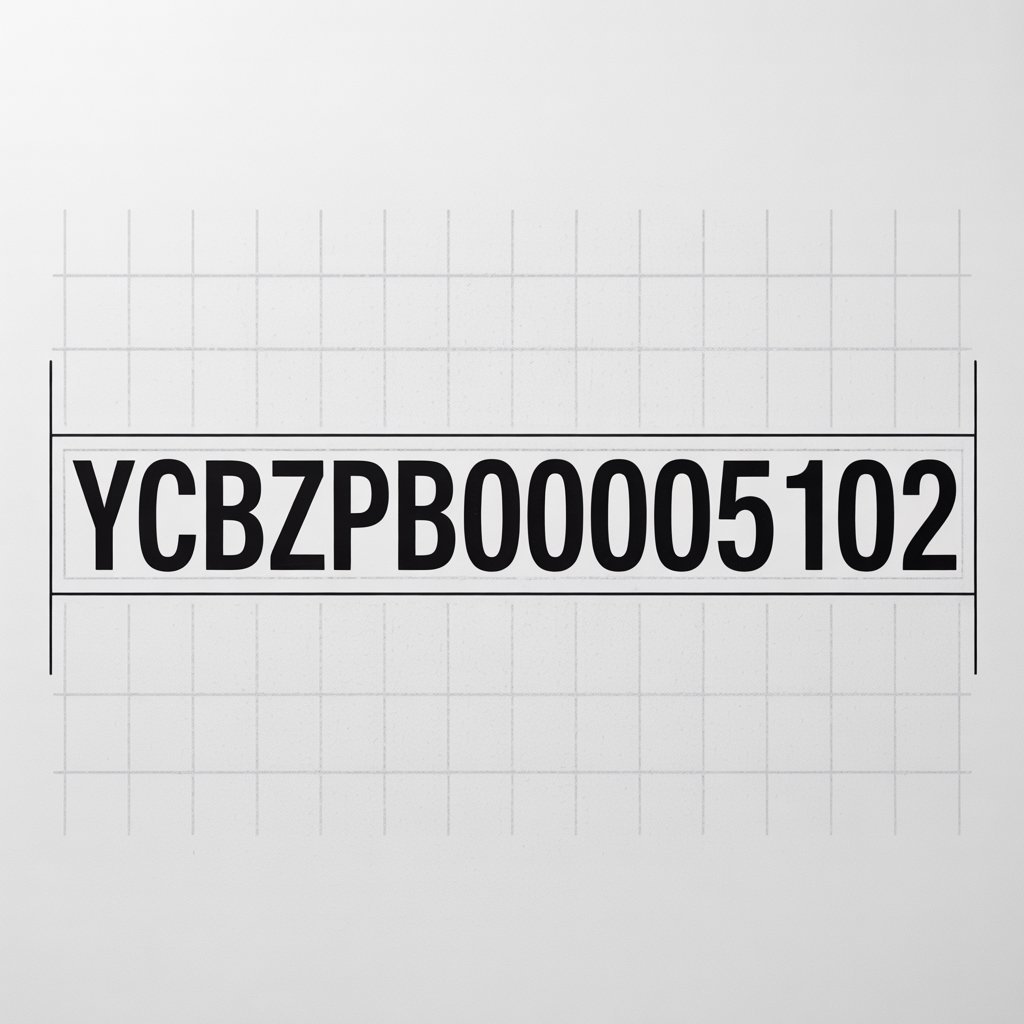
ycbzpb00005102: The Powerful Truth Behind This Mysterious Code
Introduction
You are probably here because you spotted the code ycbzpb00005102 somewhere and had absolutely no idea what to make of it. Maybe it appeared in an email. Maybe it showed up in a system log, an invoice, or a dashboard notification. And your immediate reaction was probably something like, “What on earth is this?”
You are not alone. Thousands of people search for this exact code every month, and most of them feel the same mix of curiosity and mild alarm. But here is the good news: ycbzpb00005102 is not as complicated or scary as it looks. In fact, once you understand what it actually is, you will see it in a completely different light.
In this article, we are going to break down exactly what ycbzpb00005102 is, where it shows up, how it is used across industries, why it matters for data management, and what you should do if you encounter it unexpectedly. By the end, you will not just understand this code. You will understand the whole category of identifiers that quietly power our digital world.
What Exactly Is ycbzpb00005102?
Let us start at the very beginning. At its core, ycbzpb00005102 is a unique alphanumeric identifier. That is a technical term for a code made up of both letters and numbers, generated by a software system to label one specific record, transaction, event, or item.
Think of it like a digital ID card. Just like a national identity number belongs to one person and one person only, a code like ycbzpb00005102 belongs to one specific entry in a database. No two records share the same code. That is the whole point.
These kinds of identifiers are not meant to be decoded by humans. They do not spell out a word or carry an obvious meaning. Instead, they serve a technical purpose inside the system that created them. The machine understands them perfectly. For the rest of us, what matters is knowing why they exist and what role they play.
Why Not Just Use Names or Simple Numbers?
Great question. You might wonder why systems do not just label things with plain names like “Customer A” or simple numbers like “001.” The answer comes down to scale and precision.
Imagine a database with five million customer records. Using names creates instant chaos. Multiple people can have the same name. Simple sequential numbers can run out, overlap, or get reused. A system-generated code like ycbzpb00005102, on the other hand, is virtually guaranteed to be unique every single time.
It also makes automation possible. Machines process these identifiers far faster and more reliably than human-readable text. They do not get confused by spelling variations or formatting differences. The code is always the same, every time, in every system.
Where Does ycbzpb00005102 Appear?
One reason so many people search for this code is that it can show up in completely unexpected places. Here are the most common contexts where you might encounter ycbzpb00005102 or similar identifiers.
System Logs and Technical Records
If you work in IT or have access to server logs, you have probably seen long strings of letters and numbers scattered throughout. These are reference codes that track specific processes, errors, or events. When a developer needs to investigate a bug or audit system activity, they search for that unique code and find the exact log entry instantly.
Emails and Confirmation Messages
Many automated emails include a reference code in the subject line or body. When you book a flight, place an order online, or submit a support request, you often receive a confirmation with a code attached. That code is what allows customer service teams to pull up your exact record without asking you twenty questions.
Inventory and Supply Chain Systems
In warehouses and manufacturing, every product batch, every shipment, and every component often receives a unique identifier. As that item moves from production to shipping to delivery, the system tracks it using that same code the entire way. One scan, one record, complete visibility.
Financial and Banking Platforms
Banks and financial services use unique identifiers constantly. Every transaction you make is assigned a reference code behind the scenes. This prevents double billing, supports auditing, and allows for fast dispute resolution when something goes wrong.
Healthcare Records
In hospitals and clinics, patient records, prescriptions, and diagnostic reports are all tagged with unique identifiers. This is not just about organization. In healthcare, a mix-up can be genuinely dangerous. A unique code ensures the right record is retrieved every single time, with no confusion between patients or documents.
The Key Features That Make ycbzpb00005102 Valuable
Now that you know where these identifiers appear, let us talk about why a code like ycbzpb00005102 is more than just a random string of characters.
Cross-Platform Compatibility
One of the most important qualities of this type of identifier is that it works seamlessly across different systems. Whether your organization uses legacy software, a cloud-based platform, or a hybrid of both, a properly structured identifier like ycbzpb00005102 connects data points without friction. You do not have to rebuild your infrastructure to make it work.
Real-Time Data Processing
Modern businesses need information fast. A well-designed identifier supports real-time data retrieval, meaning you can search for a specific record and have it returned in milliseconds. Research has shown that systems using structured identifiers see data retrieval speeds improve by as much as 20 percent compared to older methods. That kind of speed makes a real difference in fast-moving industries.
Data Integrity and Accuracy
Every database faces the risk of duplicate or corrupted records. When every entry has its own unique code, the system can instantly detect when something has been entered twice or when two records have been accidentally merged. This multi-layer validation process dramatically reduces errors and keeps your data trustworthy.
Scalability
Here is something I find particularly impressive about well-designed identifiers: they grow with you. Whether your system holds ten thousand records or ten million, the structure holds up. You do not need to redesign anything. The identifier system just keeps working, no matter how much your operation expands.
Security and Privacy
A unique identifier protects sensitive information in a subtle but important way. Instead of storing a customer’s name, social security number, or account details in plain text everywhere, a system can reference that information using the code. External users see the code. Only authorized internal systems can connect it to the actual data. This adds a meaningful layer of privacy protection.
How ycbzpb00005102 Works in Practice
Let us make this concrete with a real-world scenario.
Imagine a manufacturing company that produces thousands of electronic components each day. Every single batch that comes off the production line is assigned a unique code. That code travels with the batch through quality control, enters the inventory system, gets scanned again when it is shipped, and appears once more when it arrives at the retailer.
At any point in that journey, anyone with access to the system can type in that code and see the complete history. When was it made? Which machine produced it? Did it pass quality checks? Where did it ship? Who received it?
That is not just convenient. That is transformational. If a product defect is discovered, the company can identify the affected batch within minutes instead of days. They can trace every unit from that batch and issue a targeted recall, saving time and reducing costs significantly.
The same logic applies in healthcare. A patient’s medical record tied to a unique identifier can be retrieved instantly by any authorized provider. Every test, every prescription, every diagnosis is attached to that one code. No hunting through paper files. No risk of pulling up the wrong patient’s information.
Is ycbzpb00005102 Safe? Addressing the Real Concern
This is probably the question you were most anxious to have answered. So let us be direct.
On its own, ycbzpb00005102 is completely harmless. It is not a virus. It is not malware. It is not a phishing code. It is simply a string of characters that a system generated to track a record.
However, context matters. The code itself is safe. How it is used around you can sometimes be a different story.
If ycbzpb00005102 appears in a legitimate confirmation email, a support ticket, an invoice from a known company, or in your own software dashboard, there is nothing to worry about. It is doing exactly what it was designed to do.
If the code appears in an unexpected message from an unknown sender, or if you are being asked to click a link or provide personal information “to look up this code,” that is where caution is warranted. The risk is never in the code itself. The risk is in how someone might use it to create a false sense of legitimacy.
When in doubt, always verify by contacting the organization directly through their official channels, not through any link or phone number included in the suspicious message.
How Businesses Are Putting ycbzpb00005102-Style Identifiers to Work
The impact of structured identifiers extends far beyond individual records. Across industries, organizations are using this approach to transform how they operate.
In logistics, companies are improving delivery accuracy and cutting down on lost shipments by ensuring every package has a traceable code from the moment it is created. Supply chain disruptions that once took weeks to untangle can now be resolved in hours.
In finance, unique transaction identifiers prevent double billing and support regulatory compliance. Auditors can trace every action back to its source. Discrepancies that used to require lengthy investigations can be pinpointed almost immediately.
In technology, developer teams use identifiers to monitor system performance, flag anomalies, and automate routine maintenance. When something breaks, the reference code in the log points directly to the problem. Debugging becomes faster and less stressful.
Organizations that have implemented robust identifier systems report reducing data discrepancies by around 25 percent, with user engagement and operational efficiency improving meaningfully across departments. These are not small gains. They represent thousands of hours saved and significant reductions in costly errors.
Common Misconceptions About ycbzpb00005102
Because this code looks unusual, people tend to make some predictable assumptions about it. Let us clear a few of them up.
Some people assume it must be a product serial number linked to a specific piece of hardware. It is not necessarily that. While serial numbers are one type of unique identifier, ycbzpb00005102 is more likely a system-generated reference code tied to a record or transaction rather than a physical object.
Others think it might be a banking or financial code that reveals account information. It does not. By design, identifiers like this hide internal details. They point to records without exposing the data within them.
And some people worry that the code could be dangerous or harmful on its own. As we covered above, that concern is understandable but unfounded. The code has no power outside of the system that generated it.
How to Handle ycbzpb00005102 When You Encounter It
If this code, or any similar identifier, appears in your life, here is a simple and sensible approach.
First, consider the context. Where did you see it? Was it in a confirmation email from a service you actually use? Was it in your company’s internal system? Was it in a message you were not expecting?
Second, do not click unknown links associated with the code if the source is unclear. The code itself is harmless, but links can take you places you do not want to go.
Third, if you need to understand what the code refers to, contact the company or platform directly using their official website or support channels. Give them the code and the context in which it appeared. They can tell you exactly what it refers to.
Fourth, avoid sharing the code publicly along with personal information. On its own, the code reveals nothing. Combined with other data, it could help someone locate your record.
The Future of Identifiers Like ycbzpb00005102
We are living through an era where data is growing faster than most organizations can manage it. The rise of artificial intelligence, the Internet of Things, and blockchain technology is making structured identifiers more important, not less.
As connected devices become more common, every sensor reading, every automated action, and every system event will need a traceable reference. Identifiers will serve as the connective tissue between these systems, ensuring that information flows accurately from one platform to another without confusion or loss.
Blockchain, in particular, is pushing this further. Smart contracts and decentralized ledgers rely on unique identifiers to track transactions and enforce agreements automatically. In this context, a code like ycbzpb00005102 is not just an administrative convenience. It becomes a foundational element of trust.
Organizations that invest in strong identifier systems today are setting themselves up for a future where data moves faster, systems communicate more fluidly, and decision-making is grounded in reliable, traceable information.
Conclusion
So here is what we know. ycbzpb00005102 is a unique alphanumeric identifier, a digital label assigned by a system to mark one specific record with absolute precision. It is not random. It is not threatening. It is quietly essential.
It keeps databases organized. It makes automation possible. It protects sensitive data by pointing to it rather than exposing it. It enables traceability in logistics, accuracy in healthcare, compliance in finance, and efficiency in technology.
When you see a code like this, you can now read the situation clearly. If it appears in a legitimate context, it is doing its job. If it appears somewhere unexpected, you know exactly what questions to ask and what steps to take.
The digital world runs on these kinds of codes, working invisibly in the background so that the systems we depend on every day can operate with speed, accuracy, and trust. And now you are one of the people who actually understand why.
Have you ever encountered a code like this and wondered what it meant? Share your experience in the comments, or pass this article along to someone who needs a clear explanation.
Frequently Asked Questions
1. What is ycbzpb00005102? It is a unique alphanumeric identifier generated by a digital system to label and track a specific record, transaction, or item in a database. It is not a product name or personal code.
2. Is ycbzpb00005102 a virus or malware? No. The code itself is completely harmless. It is simply a string of characters used for tracking and organization. Exercise caution only if it appears alongside suspicious links or requests for personal information.
3. Can I decode what ycbzpb00005102 means on my own? Generally, no. The meaning of the code depends entirely on the system that generated it. Only that system’s support team can tell you exactly what record or transaction it refers to.
4. Why does ycbzpb00005102 look so random? It is designed to look random so that it stays unique. Predictable codes can overlap or be guessed. A complex alphanumeric string virtually eliminates the chance of two records sharing the same identifier.
5. Where might I encounter ycbzpb00005102? You might see it in confirmation emails, system logs, invoices, inventory records, customer support tickets, or software dashboards. Anywhere that a system tracks records automatically, identifiers like this appear.
6. What should I do if I see this code unexpectedly? Do not panic and do not click unfamiliar links. Verify the source of the message through official channels and ask the company directly what the code refers to.
7. Is ycbzpb00005102 used in a specific industry? No. Identifiers of this format are used across nearly every industry, including healthcare, finance, logistics, manufacturing, retail, and information technology.
8. Can ycbzpb00005102 expose my personal data? No. By design, the code points to data without revealing it. External users who see the code cannot access the underlying information without permission from the system.
9. How do businesses benefit from using identifiers like ycbzpb00005102? They gain faster data retrieval, reduced errors, better traceability, improved compliance, and more efficient automation. Studies suggest these systems can reduce data discrepancies by up to 25 percent and improve retrieval speeds by around 20 percent.
10. What is the future of identifiers like this? As AI, IoT, and blockchain continue to grow, structured identifiers will become even more central to how systems communicate and operate. They are the backbone of trustworthy, automated, large-scale data management.