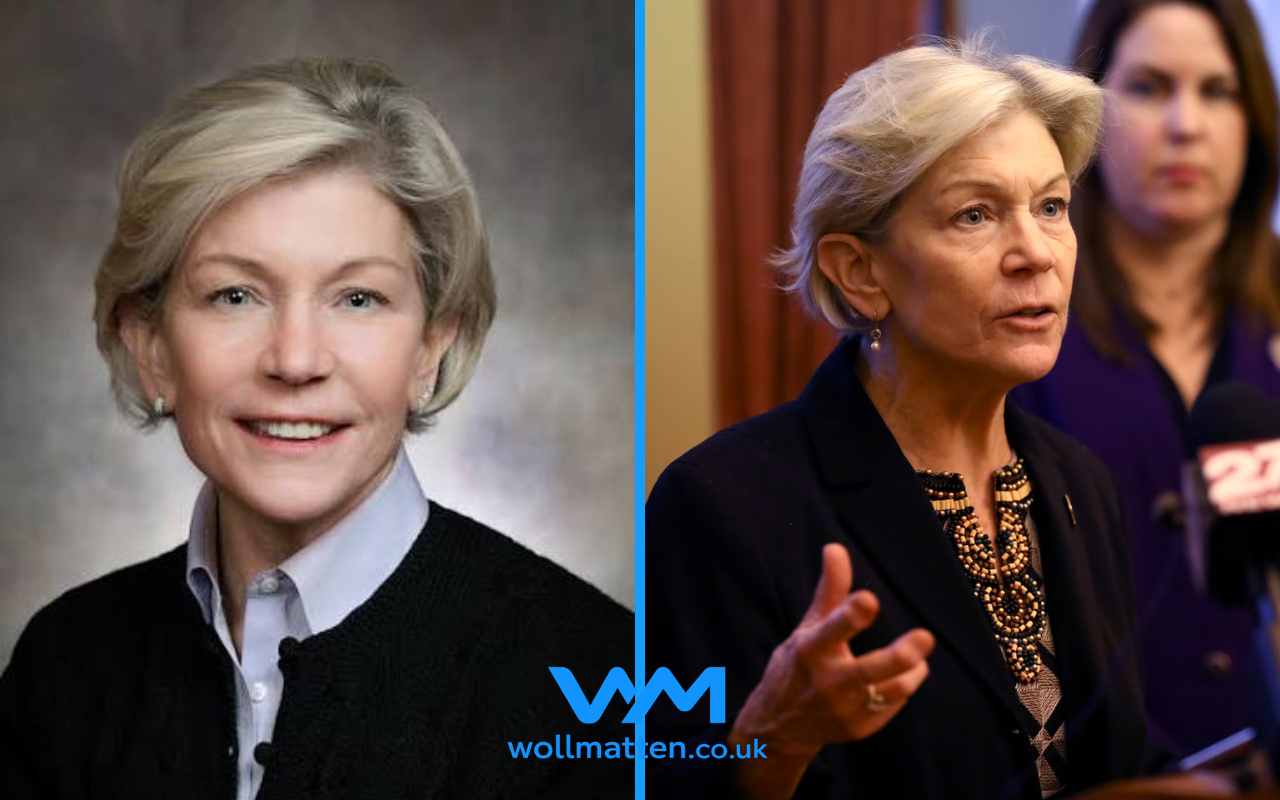
Janet Bewley: A Life of Service, Resilience, and Leadership in the Northwoods
Table of Contents
ToggleIntroduction
Few figures in Wisconsin politics have navigated the intersection of local community development, state-level policy, and raw personal resilience quite like Janet Bewley. For over a decade, her name was synonymous with the interests of the state’s northwestern region—a sprawling, rugged district bordering Lake Superior that demands a unique blend of pragmatism and grit. But Bewley’s story is not merely a political biography; it is a testament to a life dedicated to building a better community, from her work on the ground in economic development to her leadership on the Senate floor. While her political career is marked by a deep commitment to the environment, education, and the working class of Wisconsin, it was her capacity to face personal tragedy with grace that truly defines her character. This is the story of a former educator and community officer who rose to become the Minority Leader of the Wisconsin State Senate, leaving behind a legacy of service that resonates far beyond the capitol building in Madison.
Janet Bewley Quick Facts
| Category | Details |
|---|---|
| Full Name | Janet Bewley |
| Born | November 10, 1951 |
| Age | 74 (as of 2026) |
| Birthplace | Cleveland, Ohio, U.S. |
| Profession | Politician, Former Educator, Community Development Officer |
| Party Affiliation | Democratic |
| Spouse | David Saetre |
| Children | 5 children |
| Education | Case Western Reserve University (B.A.), University of Maine (M.Ed.) |
| Notable Roles | Wisconsin State Senator (25th District), Senate Minority Leader, State Representative (74th District) |
| Net Worth | Not publicly disclosed (Public servant salary) |
| Social Media | While active in politics, specific official handles are not centrally listed for public archives; she maintained a traditional constituent-focused communication style. |
Early Life and Educational Foundations
Born in Cleveland, Ohio, on November 10, 1951, Janet Bewley’s journey to the Wisconsin legislature was forged in the industrial Midwest . Growing up in Cleveland, she attended James Ford Rhodes High School, graduating in 1969 . Her academic pursuits were driven by a desire to understand the structures that shape communities. She went on to earn a Bachelor of Arts from Case Western Reserve University in 1973, a significant achievement that marked her as the first member of her family to graduate from college . This experience instilled in her a deep appreciation for education as a vehicle for upward mobility and community improvement.
However, her academic journey did not stop there. Seeking to specialize in the administrative side of education, she moved east and earned a Master’s degree in Academic Administration from the University of Maine in 1977 . This background in education administration provided her with a unique lens through which to view leadership, not as a top-down exercise of power, but as a form of nurturing growth and fostering institutional health—a perspective that would later define her political career.
Family Background and Shaping of Values
Janet Bewley’s family life is central to understanding the grounded perspective she brought to the state capitol. She is married to David Saetre, a Professor of Religion and Campus Minister at Northland College in Ashland, Wisconsin . This connection to a liberal arts college in the northwoods speaks volumes about the family’s commitment to intellectual inquiry and community service. The couple is part of a blended family, raising five children together . Family has always been a cornerstone of her life; she has spoken about her role as a parent and grandparent, and the joy she finds in family gatherings and seeing her “five grown children and three fantastic grandchildren” thrive .
The decision to move to Ashland, Wisconsin, and put down roots was a deliberate one. It signaled a shift from her urban upbringing in Cleveland to the quiet, resilient communities of the Northwoods. This environment—defined by natural beauty, economic challenges, and a fierce sense of independence—profoundly shaped her political philosophy. She saw firsthand the struggles of rural communities in Wisconsin to access housing, sustainable jobs, and state resources. This immersive experience in the “real world” of northern Wisconsin became the bedrock of her legislative priorities.
Professional Beginnings in Community Development
Before entering electoral politics, Janet Bewley built a robust career in community development and administration. Perhaps her most impactful pre-legislative role was as a Senior Community Development Officer for the Wisconsin Housing and Economic Development Authority (WHEDA) . In this capacity, she served as a State Tribal Liaison and Business Development Officer, traveling to every corner of northern Wisconsin . This was not a desk job; it was a “boots on the ground” mission to understand the economic pains and potential of the region.
Her work involved financing housing projects, supporting small businesses, and facilitating economic growth in areas that are often overlooked by the state’s economic engine in the south . Additionally, she served as Dean of Students at Northland College, reinforcing her ties to the academic community, and as Executive Director of the Mary H. Rice Foundation .
Her first foray into elected office came locally. She served on the Ashland City Council from 2007 to 2009, honing her skills in municipal governance . It was here that she learned the nuts and bolts of governance—balancing budgets, managing public works, and advocating for local needs at the county level. This foundation in local politics prepared her for the bigger stage of the Wisconsin State Capitol.
Rise in Wisconsin Politics
In 2010, Janet Bewley decided to run for the Wisconsin State Assembly for the 74th Assembly District, covering parts of northwest Wisconsin, including Ashland and Bayfield counties. She won the election, replacing Gary Sherman, and took office in January 2011 . Her tenure in the Assembly (2011–2015) established her as a pragmatic voice for the north, a politician who understood the details of state budgets and the importance of economic development to sustain rural communities.
During this time, she earned a reputation for her work on the Assembly committees and for being accessible to her constituents. Her ability to collaborate on issues related to agriculture, tourism, and the environment, even across the aisle, made her a respected figure. However, her ambitions and the needs of her community soon pointed toward a larger role.
In 2014, the retirement of long-time State Senator Robert Jauch opened the door for the 25th Senate District . Representing over 7,500 square miles, this district is one of the largest and most geographically diverse in the state . Bewley saw an opportunity to expand her service and influence. After winning a competitive primary with a decisive 72% of the vote, she went on to win the general election, succeeding Jauch .
The State Senate and Leadership
Senator Janet Bewley was sworn in as the representative of Wisconsin’s 25th Senate District in 2015, a role she would hold with distinction for eight years . During her tenure, she made a name for herself as a champion of economic development—a natural extension of her days at WHEDA—as well as a fierce advocate for the environment. Given her district’s proximity to Lake Superior and the Chequamegon-Nicolet National Forest, environmental issues and conservation were central to her platform. She consistently received high marks from conservation groups and was recognized as a “Conservation Champion” multiple times .
Her legislative priorities included expanding access to healthcare, improving infrastructure in rural areas, and supporting Wisconsin’s paper and forestry industries. She even served as vice chair of the Wisconsin Paper Caucus, showing her commitment to the state’s traditional manufacturing base while also advocating for modern environmental standards .
In April 2020, at the height of the COVID-19 pandemic, Bewley’s leadership was called upon in the most significant way. She was elected by her peers as the Minority Leader of the Wisconsin Senate, taking over from Senator Jennifer Shilling . This role thrust her into the national spotlight, placing her at the center of contentious debates regarding public health mandates, state budgets, and the balance of power in a divided state government. She navigated the challenges of the pandemic with a steady hand, often emphasizing the need for the state to follow science and protect its most vulnerable residents.
Personal Life, Resilience, and a Fatal Accident
While Janet Bewley’s political career is impressive, her personal story took a tragic turn in July 2022. She was involved in a devastating car crash. According to reports, Bewley was driving out of a public beach in northern Wisconsin when her car was struck by another vehicle traveling at roughly 100 mph . The high-speed collision caused the other vehicle to careen across the highway and hit a third car. Tragically, the driver of the speeding vehicle, 27-year-old Alyssa Ortman, and her five-year-old daughter were killed .
This incident was a profound shock to the community and to Bewley personally. She was speaking on the phone with a reporter at the time of the crash and had undergone eye surgery the day before, though none of these factors were cited as primary causes of the accident . The tragedy underscored the fragility of life and the random nature of fate. For Bewley, it was a deeply traumatic experience that undoubtedly weighed on her decision regarding her future in politics. She chose not to seek reelection in the fall of 2022, ending a remarkable career in public service .
Honors, Awards, and Impact
Throughout her career, Janet Bewley received numerous accolades that reflect the wide-reaching respect she commanded. These honors span across the diverse industries she championed. The Wisconsin Builders Association named her a “Friend of Housing” multiple times (2018, 2016, 2014), recognizing her work on housing accessibility and development . Her efforts to support local industry were acknowledged when she was named “Friend of Wisconsin Craft Brewers” in 2013, highlighting her support for the burgeoning microbrewery industry.
On the public safety and labor front, she received the “Legislator of the Year” award from the Professional Fire Fighters of Wisconsin in 2018 . The same year, she was recognized as a “Champion of Economic Development” by the Wisconsin Economic Development Association . For her work on healthcare, the Wisconsin Association of Free & Charitable Clinics named her “Legislative Advocate of the Year” in 2019 . Perhaps most telling of her values, the Wisconsin League of Conservation Voters named her a “Conservation Champion” multiple times (2018, 2014, 2012), illustrating her unwavering commitment to the Northwoods environment .
Net Worth and Income Sources
As a career public servant for much of her professional life, Janet Bewley’s net worth is not a subject of public fascination or vast wealth. She was a salaried state employee during her tenure in the Assembly and Senate. State legislators in Wisconsin receive a base salary, which for most of her tenure was around $50,000 to $55,000 per year, with additional per diems for travel and expenses—important for a representative of a district as large as the 25th.
Her primary income streams throughout her life have been derived from her roles in education (Dean of Students at Northland College), community development (WHEDA), and public service (State Legislator). There is no public record of significant private investments or business holdings that would suggest an accumulation of substantial net worth. Her wealth is best measured in the social capital she built—the trust of the voters, the respect of her colleagues, and the tangible policy improvements she secured for the people of northwestern Wisconsin.
Social Media and Public Interaction
While a contemporary figure, Janet Bewley represented a traditional style of politics deeply rooted in face-to-face communication. In a district as vast as hers, town hall meetings, local radio appearances, and newspaper interviews were always pivotal to her constituent outreach. However, she did maintain a presence on social media platforms to connect with constituents in a digital age. She used her accounts to share legislative updates, attend local events, and celebrate community achievements.
Her engagement style was generally warm and approachable, reflecting her background as an educator. She was known to be responsive to direct messages, focusing on policy rather than social media drama. She often used these platforms to highlight the good news from the northwoods—such as local business openings or school achievements—showcasing her deep, genuine affection for her district. Since her retirement, her online presence has shifted focus toward community advocacy and personal reflection.
The Future and Ongoing Legacy
Since her retirement in January 2023, Janet Bewley has stepped back from the intense public spotlight, likely enjoying more time with her family and David Saetre. However, her legacy is very much alive. The policies she championed continue to shape development in northern Wisconsin. Her leadership style—emphasizing the importance of rural voices in a state often dominated by urban interests—set a precedent for future politicians representing marginalized regions.
Beyond politics, Bewley is also an artist. She is one of the original cast members of the Lake Superior Big Top Chautauqua, a legendary musical tent show in Bayfield, Wisconsin, and she continues to perform as part of the Rittenhouse Chamber Singers . This artistic side reveals a woman of depth and passion who sees community not just as a political district, but as a place of culture and connection.
Her future goals seem to be focused on personal peace and continued service in a less formal capacity. She remains an elder stateswoman for the Wisconsin Democratic Party, though her future may involve more singing and less campaigning.
Conclusion
Janet Bewley’s story is one of dedication to place and principle. From her roots as a college-educated administrator to her rise as the Minority Leader of the Wisconsin Senate, she demonstrated that effective leadership comes from genuine understanding and empathy. She navigated the complex needs of her vast district while facing personal tragedy with courage. As she continues to enjoy her life in the beautiful Lake Superior region, her journey serves as a powerful example of how resilience, a commitment to education, and a deep love for community can shape a meaningful and lasting public legacy.
Reads this to: Sylvia Weinstein: A Life of Unyielding Activism and Revolutionary Spirit
Frequently Asked Questions (FAQs)
Who is Janet Bewley?
Janet Bewley is a former American politician from Wisconsin. She served as a Democratic member of the Wisconsin State Assembly and the Wisconsin State Senate, representing northwestern Wisconsin. She was the Senate Minority Leader from 2020 to 2023.
What district did Janet Bewley represent?
She represented the 25th Senate District, which covers a vast expanse of northwestern Wisconsin, including areas like Ashland, Bayfield, Iron, and Price counties. She previously represented the 74th Assembly District.
What was her background before entering politics?
Before politics, Bewley worked as an educator and community development officer. She was a Dean of Students at Northland College and a Senior Community Development Officer for the Wisconsin Housing and Economic Development Authority (WHEDA).
When did she retire from the Wisconsin Senate?
She retired in January 2023, choosing not to seek reelection in the 2022 fall elections.
Who is Janet Bewley’s spouse?
She is married to David Saetre, a Professor of Religion and Campus Minister at Northland College.
Is Janet Bewley related to the Olympic fencer?
No. Janet Bewley, the Wisconsin politician, is distinct from Janet Bewley-Cathie-Wardell-Yerburgh, a British Olympic fencer.
What are some of her major awards?
She received awards from various groups, including the Wisconsin Association of Free & Charitable Clinics, Professional Fire Fighters of Wisconsin, and the Wisconsin League of Conservation Voters .