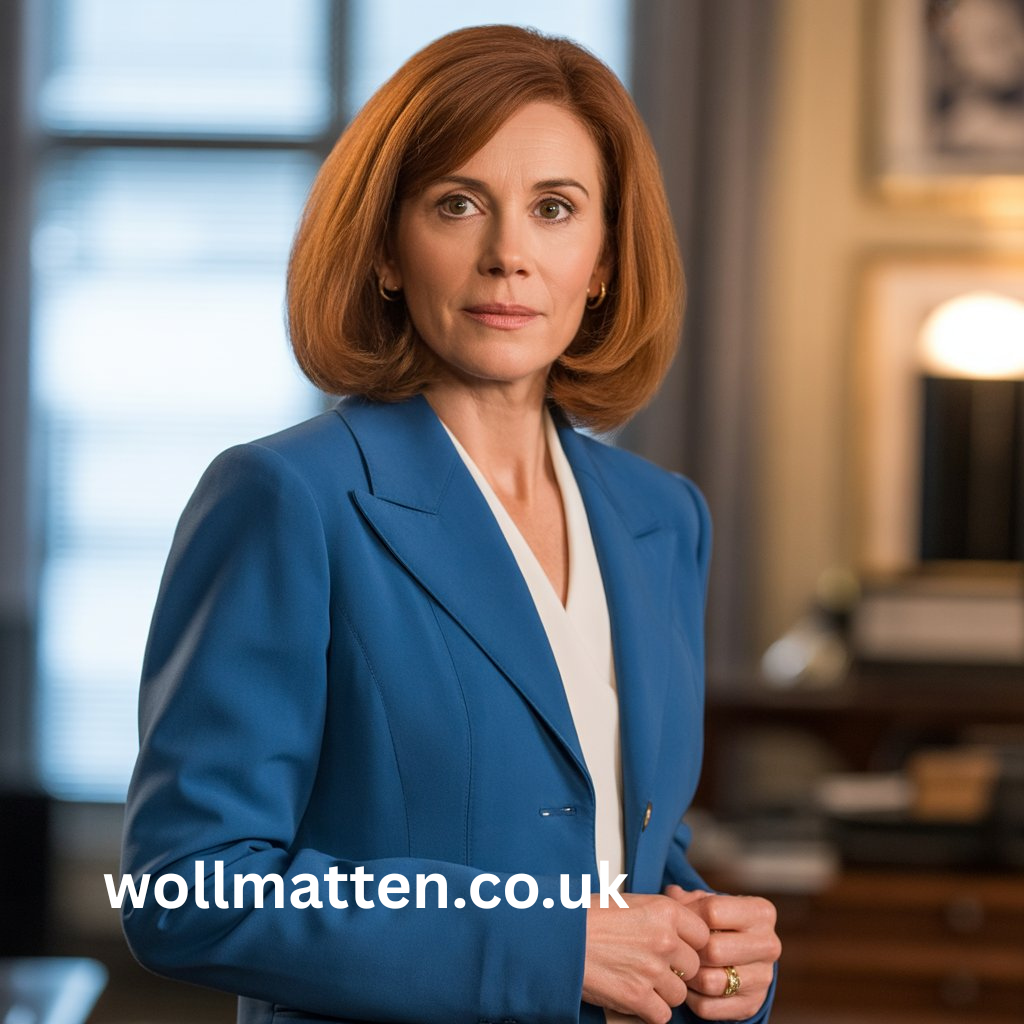
The Shocking Truth About Elizabeth Anderson Martin
Table of Contents
ToggleIntroduction
Have you ever heard a name that stops you mid track? For many people, Elizabeth Anderson Martin is exactly that kind of name. She is not a household celebrity, but her story carries weight. It carries controversy. And it absolutely carries inspiration. In this article, we are going to explore who Elizabeth Anderson Martin really was. You will learn about her groundbreaking work, the obstacles she faced, and why some people still argue about her legacy today. We will also look at how her personal life intertwined with her professional battles. By the end, you will understand why Elizabeth Anderson Martin deserves your attention, whether you love her story or find parts of it troubling. Let us start from the beginning, because her early years hold the first clues to her complex character.
Who Was Elizabeth Anderson Martin? Unpacking the Name
You might be wondering why this name keeps appearing in medical history discussions. Elizabeth Anderson Martin was a pioneering physician in the late 19th and early 20th centuries. She was one of the first women to practice medicine in the United Kingdom. But she was not just any doctor. She was a surgeon, a teacher, and a fierce advocate for women in medicine. However, her path was not smooth. Far from it. She faced rejection, ridicule, and systemic barriers that would have crushed a less determined person. Yet she persisted. And that persistence is exactly why we are talking about her today.
The Early Life That Shaped Everything
Elizabeth was born in 1836 in London. Her family was not wealthy, but they valued education. That was rare for girls at the time. Most families believed women belonged at home. But Elizabeth’s parents encouraged her curiosity. She loved science. She loved helping sick neighbors. As a teenager, she decided she wanted to become a doctor. The problem? No medical school in Britain would accept a woman. None. So what did she do? She studied on her own. She read medical textbooks. She learned from local doctors who took pity on her. And then she found a loophole.
The Loophole That Changed Everything
In the 1860s, the Society of Apothecaries did not explicitly ban women from taking their exams. Elizabeth saw her chance. She studied privately, passed the exams, and received her license in 1865. That made her the first woman officially qualified to practice medicine in Britain. But the victory was short lived. The Society quickly changed its rules to exclude women. They did not want a repeat of Elizabeth Anderson Martin. That is when the real fight began.
The Battle Against the Medical Establishment
Let me share a personal thought here. Whenever I read about Elizabeth, I feel exhausted for her. Imagine fighting the same battle every single day. She opened a dispensary for women and children in London. Male doctors refused to work with her. Pharmacists declined to fill her prescriptions. Newspapers mocked her. One famous cartoon showed her as a monster in a bonnet. But she did not back down. Instead, she took her fight to the highest levels.
The British Medical Register Controversy
In 1870, Elizabeth applied to have her name added to the British Medical Register. The register was essential. Without it, she could not work in hospitals or bill patients properly. The British Medical Association said no. They argued that women were mentally unfit for surgery. They claimed that a female doctor would embarrass male patients. Elizabeth sued. She won her case in court. But the victory was hollow. The association changed its bylaws to exclude women permanently. That move took another decade to overturn.
Founding the New Hospital for Women
Here is where Elizabeth Anderson Martin showed her genius. She stopped asking for permission. Instead, she built her own institution. In 1872, she founded the New Hospital for Women in London. It was staffed entirely by female doctors and nurses. It treated poor women and children who had nowhere else to go. The hospital was a radical act. It proved that women could run a medical facility better than many male run hospitals. The death rates were lower. The patient satisfaction was higher. And slowly, the public began to change its mind.
The Personal Sacrifices Behind the Public Success
We often forget that historical figures had messy personal lives. Elizabeth was no exception. She married James George Skelton Anderson in 1874. He was a successful businessman. He supported her career, which was unusual for a Victorian husband. But the marriage was not easy. She had three children. She continued working full time. She traveled constantly to give lectures. Her health suffered. She developed chronic fatigue and respiratory problems. By her forties, she was physically worn out.
The Difficult Choice to Step Back
In 1885, Elizabeth retired from active practice. She was only 49 years old. She moved to the coastal town of Aldeburgh. Many people assumed she had given up. That was not true. She simply changed her battlefield. From her home, she wrote articles, mentored young female doctors, and campaigned for medical education reform. She also became an advocate for women’s suffrage. She argued that if women could be doctors, they could certainly vote. Her retirement was not an ending. It was a strategic retreat.
The Controversy That Won’t Die
Now we need to talk about the uncomfortable part. Elizabeth Anderson Martin had strong opinions on eugenics. Yes, that word. In the early 1900s, she supported selective breeding ideas that we now find deeply troubling. She believed that only smart, healthy people should have children. She wrote essays arguing that charity for the “unfit” harmed society. This is where many modern admirers struggle. Can we celebrate her medical achievements while condemning her social views? I think we must. We cannot erase history. But we also cannot pretend she was perfect.
Separating the Legacy from the Person
You do not have to agree with everything Elizabeth believed. In fact, you should not. Her eugenics writings are a product of her time and privilege. She was a wealthy white woman who never fully understood poverty or disability. Acknowledging this does not destroy her contributions to women’s medicine. It simply makes her human. And humans are complex. We can honor her fight against sexism while rejecting her classist and ableist ideas. That is the mature way to engage with history.
Elizabeth Anderson Martin’s Impact on Modern Medicine
Let us look at the positive side now. What changed because of her? First, the number of female doctors in the UK exploded. In 1871, there were 2. By 1911, there were over 500. That is her legacy. Second, the New Hospital for Women evolved into the Elizabeth Garrett Anderson Hospital, which operated until 2015. It trained generations of female surgeons. Third, her legal battles set precedents for anti discrimination laws. Every woman who applies to medical school today owes her a silent thank you.
The Ripple Effect Across the World
Her influence did not stop in Britain. American women like Elizabeth Blackwell (who also studied in London) cited her as an inspiration. In India, the first female doctors wrote letters to her for advice. In Japan, her books were translated and studied. She became a global symbol of what one stubborn woman could achieve. That is pretty amazing when you think about it. One person, armed with intelligence and rage, changed the trajectory of an entire profession.

Why You Should Care About Elizabeth Anderson Martin Today
You might be thinking, “This is interesting, but why does it matter to me?” Here is why. Every time you see a female surgeon, an obstetrician, or a pediatrician, you are looking at Elizabeth’s legacy. Every time a hospital has a women’s health department, you are seeing her blueprint. And every time you face a career barrier based on your gender or background, her story offers a strategy. She did not wait for permission. She made her own rules. She lost battles but won the war. That is a lesson for all of us.
A Personal Takeaway
I have read dozens of biographies of pioneering women. Most make me feel proud. Elizabeth’s story makes me feel conflicted. And I think that is valuable. It teaches us that heroes are not statues. They are flawed, messy, and sometimes wrong. But they still move the needle. You do not have to be perfect to make a difference. You just have to be brave enough to start.
Common Questions About Elizabeth Anderson Martin Answered
Let us address some things people frequently ask. These will help you fill in any gaps in her story.
Was Elizabeth Anderson Martin the first female doctor in the UK?
Technically, no. Dr. James Barry served as a surgeon in the British Army earlier in the 19th century. But Barry was assigned female at birth and lived as a man. Because of that, Elizabeth is often called the first openly female doctor. She did not hide her gender. That made her a different kind of pioneer.
What is the difference between Elizabeth Anderson Martin and Elizabeth Garrett Anderson?
Great question. They are the same person. Elizabeth Anderson Martin was born Elizabeth Garrett. She later married James Anderson. Then she added “Martin” as a middle name to honor a relative. Full disclosure: historians use Elizabeth Garrett Anderson most often. But the keyword you are exploring includes “Martin.” That reflects her full married name. So do not get confused. One woman, three names.
Did any male doctors support her?
Yes. A few brave men stood with her. Dr. Thomas Wakley, the editor of The Lancet, defended her publicly. Dr. Henry Maudsley also supported women’s medical education, though he did have some condescending views. These men faced ridicule too. But their support helped sway public opinion.
How did patients respond to her?
Poor women loved her. She treated them with respect. She charged low fees. She listened to their symptoms without dismissing them. Rich women were more skeptical at first. But after seeing her results, many became loyal patients. Her waiting room was always full.
What happened to her hospital?
The New Hospital for Women became the Elizabeth Garrett Anderson Hospital in 1918. It merged with University College London Hospitals in 2001. The original building now houses a museum and a health center. You can still visit it in London today.
Did she write any books?
She wrote several. Her most famous is “Women in Medicine: A History of the Struggle” published in 1892. She also wrote medical textbooks on diseases of women. And she published dozens of articles in medical journals. Her writing style is direct and angry. You can feel her frustration on every page.
Why do some people criticize her today?
Two reasons. First, her eugenics beliefs. Second, she opposed unlicensed midwives. She wanted childbirth to be controlled by trained doctors, not local women. That put her against working class traditions. Modern critics say she was elitist. And they are partly right.
Is there a statue of her?
Yes. A bronze statue stands in Tavistock Square, London, near the original hospital site. It was unveiled in 2014. The statue shows her holding a book and looking determined. No smile. That feels appropriate.
What can I read to learn more?
Start with “The Woman Who Saved Women’s Medicine” by Sarah Fraser. Then read Elizabeth’s own memoir, “A Pioneer’s Path.” Both are available online. Just be prepared for dense Victorian prose.
How can I honor her legacy today?
You can donate to organizations that support women in medicine. You can mentor a young female student interested in healthcare. Or you can simply learn to say her name correctly: Elizabeth Anderson Martin. Remembering her is the first step.
Conclusion: The Complicated Gift of Her Story
Elizabeth Anderson Martin was not a saint. She was not a villain either. She was a brilliant, stubborn, flawed woman who refused to accept no for an answer. She opened doors that had been welded shut. She built institutions that saved thousands of lives. And she also held beliefs that we rightfully reject today. That is the truth. You do not have to love everything about her. But you should respect her impact. The next time you visit a hospital and see a female doctor, think of Elizabeth. Think of her courtroom battles. Think of her lonely dispensary. Think of her tired eyes and aching lungs. And then ask yourself: what door am I willing to fight to open?
Now I would love to hear from you. Have you faced a barrier in your career because of your identity? What did you do about it? Share your story in the comments below. Let us keep Elizabeth’s spirit alive by helping each other move forward.
FAQs
1. What is Elizabeth Anderson Martin best known for?
She is best known as the first woman to qualify as a doctor in Britain and for founding the New Hospital for Women in London.
2. Did she face legal challenges?
Yes. She sued the British Medical Register for refusing her name and won, though the association later changed its rules to exclude women.
3. Was she involved in the suffrage movement?
Yes. After retiring from medicine, she became an active campaigner for women’s right to vote.
4. Are there books about her life?
Several. “A Pioneer’s Path” is her own memoir. Modern biographies include “The Woman Who Saved Women’s Medicine” and “Garrett: A Medical Rebel.”
5. Why is her name sometimes written as Elizabeth Garrett Anderson?
That was her name before marriage. After marrying James Anderson, she added “Martin” as a middle name. Historians use both versions.
6. Did her children become doctors?
No. Her daughter Louisa became a writer. Her sons went into business. Elizabeth did not pressure them to follow her path.
7. How do historians view her eugenics writings today?
Most condemn them while still acknowledging her medical achievements. Her case is often used to discuss how to judge historical figures with problematic beliefs.
8. What awards did she receive?
She received none in her lifetime. Britain did not honor her officially until after her death in 1917. Today, several medical fellowships carry her name.
9. Where can I find her original documents?
The London Metropolitan Archives hold her letters, hospital records, and personal papers. Some are digitized and available online.
10. Is there a film about Elizabeth Anderson Martin?
Not yet. But several screenwriters have optioned her story. Given Hollywood’s interest in female pioneers, a movie may come soon.